
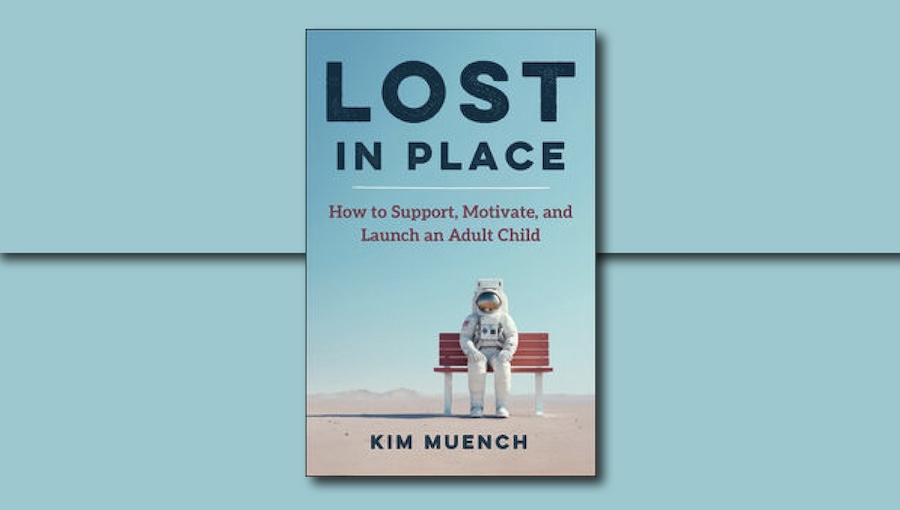
The following is an interview with author and certified parent coach Kim Muench regarding the November 24th release of the practical parenting guide, Lost in Place: How to Support, Motivate, and Launch an Adult Child, through publisher Jossey-Bass. In this interview, Fanbase Press Editor-in-Chief Barbra Dillon chats with Muench about her creative and research processes in crafting the framework for parents searching for help, what readers may take away from the book’s advice, and more!
Barbra Dillon, Fanbase Press Editor-in-Chief: What can you tell us about the genesis behind this practical guide for parents?
Kim Muench: I’ve spent a decade coaching parents, and over the years I’ve watched a growing number of families struggle with a stage of parenting they never expected to be so difficult. Their kids were technically adults, but they weren’t moving forward in the ways anyone had imagined. Some were living at home, others were financially dependent, and many were dealing with anxiety, depression, substance use, or simply feeling overwhelmed by the expectations of adulthood.
When a good friend and fellow coach shared the phrase “lost in place,” I asked if I could use it publicly because I couldn’t stand the term “failure to launch.” To me that term implies something is fundamentally wrong with these young people, and I don’t believe that’s true. More often, I see capable young adults who have lost confidence, direction, or the skills they need to take their next steps.
As a mother of five adult children, I’ve also lived through some of these challenges myself. I know what it feels like to love your child fiercely while questioning whether the way you’re helping is actually helping.
I wrote Lost in Place because parents need more than reassurance that they’re not alone. They need practical guidance for what to do differently, especially when everything they’ve tried so far seems to have made little difference.
BD: How would you describe your research and creative processes for crafting a helpful framework for parents in need of support with their “lost in place” adult children?
KM: Much of this book grew out of years of conversations with parents. Through private coaching and group sessions, I’ve had the opportunity to understand what families are experiencing behind closed doors, what keeps them stuck, and what actually helps them move forward.
I also drew on established approaches to parenting and problem-solving, particularly collaborative problem-solving, emotional regulation, and the importance of healthy boundaries.
One thing became increasingly clear to me: Parents were spending enormous amounts of energy trying to change their adult children, often at the expense of their own well-being and their relationship with that child.
So, I developed a framework around what parents can influence, beginning with what I call the Four C’s: Clarity, Calm, Confidence, and Consistency. These are skills parents can develop regardless of whether their adult child is ready to make changes.
I wanted the book to be something parents could actually use. That’s why it includes practical tools, conversation examples, and case studies based on the experiences of families I’ve worked with. My goal wasn’t to give parents another book filled with good ideas they would struggle to implement. I wanted to help them understand what might be happening beneath their child’s behavior and give them a different way to respond.
BD: At Fanbase Press, our #StoriesMatter initiative endeavors to highlight the impact that stories can have on audiences of various mediums and genres. How do you feel that this book might connect with and impact readers, and what, if any, conversations do you hope that it might inspire?

KM: I believe the stories we tell ourselves about our children have an enormous influence on how we parent them.
When a parent believes their adult child is lazy, unmotivated, or taking advantage of them, it’s difficult to approach that relationship with curiosity or compassion. But when we begin to consider the behavior, we’re seeing might be rooted in fear, shame, anxiety, or a lack of skills, the conversation changes. That’s what I hope this book inspires.
I also want parents to recognize themselves in these pages. So many are carrying tremendous guilt, embarrassment, and isolation. They’re watching friends celebrate their children’s graduations, careers, marriages, and milestones while privately wondering what went wrong in their own family.
I want those parents to know their child’s timeline is not a reflection of their worth as a parent.
And I hope Lost in Place encourages more honest conversations between parents and their adult children. Less lecturing and fixing. More listening, collaboration, and mutual respect.
If there’s one message I hope stays with readers, it’s that you can love your adult child, believe in their ability to build a meaningful life, and still have boundaries around what you’re willing to do for them. Those things aren’t mutually exclusive.
BD: What makes Jossey-Bass the perfect publishing partner for Lost in Place?
KM: Jossey-Bass has a long history of publishing books that help people navigate important challenges in their personal and professional lives. That combination of thoughtful ideas and practical application was exactly what I wanted for Lost in Place.
I didn’t want to write a book that simply identified a problem. I wanted to offer a resource that parents could return to when they were facing a difficult conversation, questioning a boundary, or trying to decide whether to step in or step back.
Working with an established publisher also gives this conversation an opportunity to reach beyond my existing community. There are so many parents quietly struggling with these issues, and I want this book to find its way into their hands, as well as into the offices of therapists, counselors, and other professionals who support families.
Ultimately, I believe the message of Lost in Place deserves a wider audience, and I’m grateful to have Jossey-Bass helping me bring it there.
BD: For readers who may be struggling in their parenting journeys, are there any additional resources or advice that you would like to offer?
KM: My first piece of advice is to stop measuring your success as a parent by the choices your adult child is making. While you, the parent, have been the foundation…there are many other influences on your adult child.
I know that’s easier said than done, particularly when you’re watching someone you love make decisions that worry you. But when your emotional well-being becomes tied to whether they get a job, attend therapy, stop using substances, or follow through on a commitment, you can lose yourself in the process.
Start by asking a different question: “What is actually within my control here?”
You can control how you communicate, what you financially support, what happens in your home, and how consistently you follow through on your boundaries. You cannot control another adult’s motivation, decisions, or willingness to accept help.
I also encourage parents to find support for themselves. That’s one reason I created my Empowered Parents of Emerging Adults support group. Having a place to talk openly with other parents who understand what you’re experiencing can be incredibly helpful.
And please remember progress rarely happens in a straight line. Your adult child may take two steps forward and one step back. That doesn’t mean nothing is working.
BD: Lastly, what would you like to tell readers who want to learn more about Lost in Place and your other work?
KM: Lost in Place: How to Support, Motivate, and Launch an Adult Child will be available November 24, 2026, wherever books are sold.
I hope it becomes a resource parents can turn to when they’re exhausted from worrying, tired of repeating the same conversations, or simply unsure what to do next.
You can also learn more about my work through Real Life Parent Guide, where I offer private parent coaching, live classes, and my Empowered Parents of Emerging Adults support group.
I share parenting guidance and encouragement regularly on social media, too, because I believe parents need ongoing support, not just something to read when they’re in crisis. I’m on Facebook as Real Life Parent Guide. I’m also on Instagram and TikTok as @kimmuenchparentcoach.
Above all, I want parents to know that their child’s current circumstances don’t have to define the rest of either of their lives. There is room for change, for a healthier relationship, and for a meaningful life for both generations.
And sometimes, that change begins when the parent decides to do something differently.
