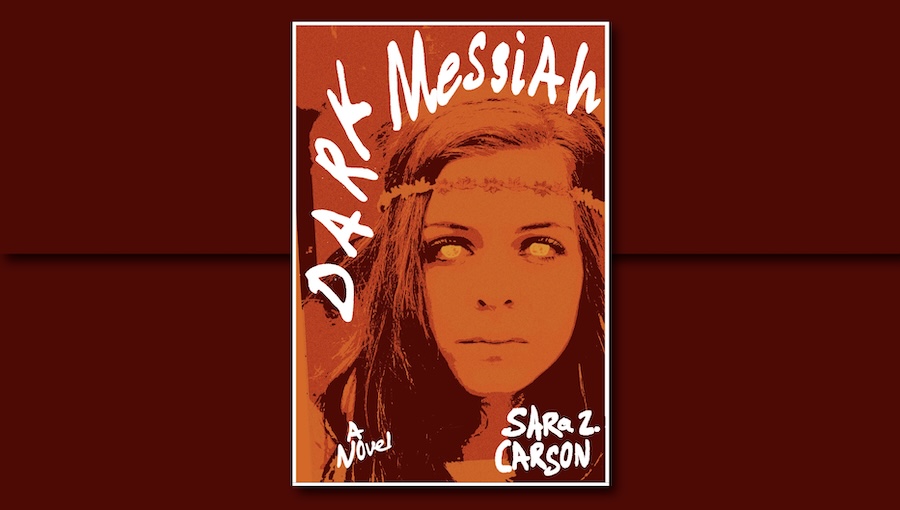
The following is an interview with author Sara Z. Carson regarding the release of her historical fiction novel, Dark Messiah, through Navigator Books. In this interview, Fanbase Press Editor-in-Chief Barbra Dillon chats with Carson about her creative process in bringing the story and its characters to life on the page, what readers may take away from the story’s themes, and more!
Barbra Dillon, Fanbase Press Editor-in-Chief: Congratulations on the release of your debut historical fiction novel, Dark Messiah! What can you tell us about the genesis behind this project, and how would you describe its premise?
Sara Z. Carson: Cults and Peoples Temple, in particular, have always been interesting to me. I was, like a lot of people, drawn initially to understanding Jim Jones as a person and as a leader, and also trying to understand how people could follow him. As I learned more about his organization and his character, I became more interested in the many, many unique people who joined Peoples Temple.
I am one of those people who, once they’re interested in something, they talk about it a lot — I am really fun at parties if you want to talk about coercive control or NXIVM. I was at an event with my now publisher, Brendan Cahill, and he asked me, “Why don’t you write a book about a cult?” And that got me started.
Cult leaders, after you read enough about them or watch enough documentaries, are a dime a dozen. They follow an age-old playbook to seduce their membership. Their stories have been told over and over. I didn’t think I had anything to add to that, but I did find the idea of writing from the perspective of someone inside the organization, trying to make sense of what is happening to them, compelling.
One of the astonishing facts about Jonestown is that about one-third of the victims were eighteen years old or under. So, taking the perspective of a young woman –— who is trying to navigate being a teenager and figuring out who she is, while being in an organization that is controlling her entire life, became the story I wanted to tell.
BD: As the story finds its inspiration from Jim Jones’ cult, the Peoples Temple, what can you share with us about your research of cults and the personalities that may be drawn to them, as well as your creative process in bringing the story to life on the page?
SZC: My goal was always to portray Nell, my protagonist, as well as the people around her, as full human beings. There’s a false perception that people who are in cults are mindless, broken automatons and that just isn’t true. Cult members are more often than not high-functioning, idealistic, intelligent people. What brings someone to an organization like this isn’t really any specific personality trait but circumstance. Experiencing trauma or loss, moving to a new place, losing a job, getting a divorce can lead an individual to be vulnerable in the world and seeking answers, which can make that person an easy target.
I read a lot of books and watched a lot of documentaries, and a few that really stuck with me were The Vow, HBO’s miniseries on NXIVM, and the book And Then They Were Gone by Judy Bebelaar and Ron Cabral, a memoir written by the teachers who educated the children of Peoples Temple before they were sent to Guyana. I also spent a lot of time on the website, Jonestown & Peoples Temple: A Digital Archive, which is a really extraordinary collection of speeches, audio recordings, photos, and personal memories from Peoples Temple members.
What struck me across all of these documents and materials was the joy and the commitment. There’s a perception that people are miserable in these organizations, but they certainly are not unhappy all of the time. There’s community and family, and there’s a fierce sense of dedication to making the world better. I wanted very badly to capture those elements in addition to the horror.
BD: At Fanbase Press, our #StoriesMatter initiative endeavors to highlight the impact that stories can have on audiences of various mediums and genres. How do you feel that Nell’s story may connect with and impact readers, and what, if any, conversations do you hope that it may inspire?
SZC: I would like for anyone who reads this to come away with compassion for complicated victims. A lot of cult members are victims and perpetrators. The Vow was a great resource for me to understand how a person can be both of these things, and to appreciate how challenging that is for the person experiencing it.
BD: Dark Messiah marks the first-ever fiction novel for Navigator Books! What makes Navigator the perfect publishing partner for this story?
SZC: They were enthusiastic about the book and the team is scrappy, passionate, and talented. I was excited about their approach to the industry and understanding of the landscape.
BD: Are there any projects that you would like to highlight to our readers?
SZC: I definitely recommend the books and documentaries I mentioned above; I would also recommend Jeff Guinn’s The Road to Jonestown and Karina Longworth’s You Must Remember This podcast episodes on Charles Manson, as well.
BD: Lastly, what is the best way for our readers to find more information about Dark Messiah and your work?
SZC: My website, sarazcarsonauthor.com, has all of my socials on it, and my very newly launched Substack, The Sara Cult.
