
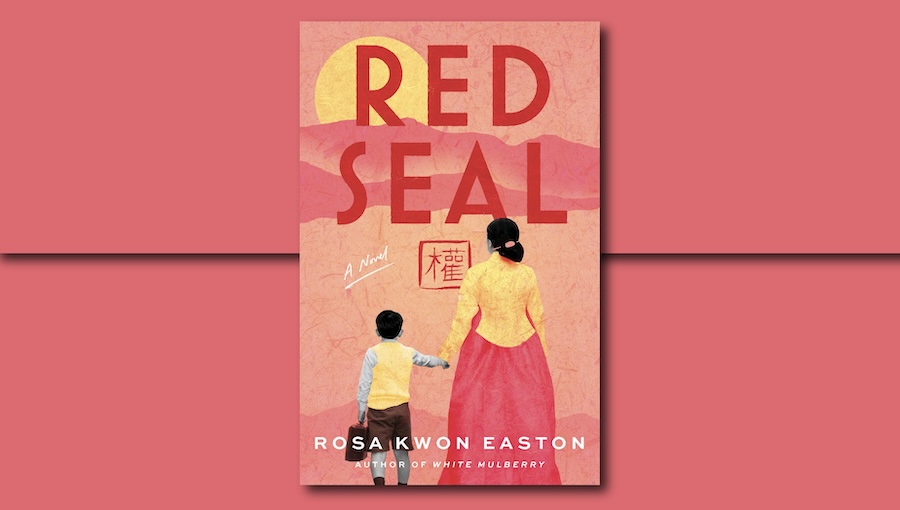
The following is an interview with author Rosa Kwon Easton regarding the release of her latest historical fiction novel, Red Seal, through Lake Union. In this interview, Fanbase Press Editor-in-Chief Barbra Dillon chats with Kwon Easton about her creative process in bringing the story and its characters to life on the page, what she hopes that readers may take away from the story’s themes, and more!
Barbra Dillon, Fanbase Press Editor-in-Chief: Congratulations on the recent release of Red Seal! What can you tell us about the genesis behind this project, and how would you describe the story’s premise?
Rosa Kwon Easton: Thank you for having me!
Red Seal is based on oral interviews I conducted with my grandmother before she passed away at 95, and my father, who is 90 this year. I wanted to capture their stories before they were lost and share them with the next generation.
Red Seal is a sequel to my debut White Mulberry, but it stands alone. It follows the journey of a single mother and her young son, as they navigate the Japanese Occupation of Korea and Manchuria, WWII and the Korean War. The son longs to claim his true family name, signified by his father’s name seal, which was lost when his stepfather adopted him. But his mother seeks to prevent him from doing so to protect him, as well as her secrets. The conflict and love between a mother and son are at the heart of the novel.
BD: Your previously noted that your work on White Mulberry was researched through interviews with your grandmother about her life in colonial Korea under the Japanese occupation. What can you share with us about your research process for this book, as well as your creative process for bring the story and characters to life on the page?
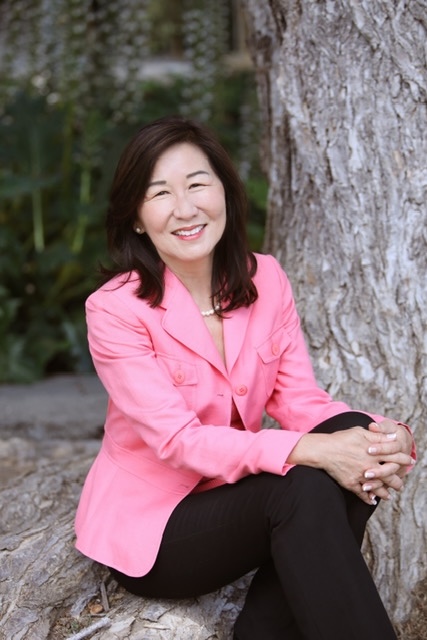
RKE: In the process of interviewing my grandmother for White Mulberry, I also interviewed my father. After my grandmother passed away, I spent every Tuesday afternoon talking with my father, carefully going over the details of my grandmother’s life. This naturally led to my father talking about his own memories, and I knew I had material for his story, too.
The interviews of my father became the inspiration for Red Seal. The most surprising part of hearing my father’s stories was how different some of his recollections were from my grandmother’s. It was the duality of their points of view that I found most compelling during this process. That’s why I chose to write a dual point of view historical novel in both the mother’s and son’s perspectives.
I also spent months researching the Pacific War, the Korean War, and the aftermath. I read history books, memoirs, and biographies that provided glimpses into everyday life during that time. I incorporated my findings into the world I envisioned that my grandmother and father must have navigated and endured. I hope readers who read Red Seal learn something new about this period of history.
BD: At Fanbase Press, our #StoriesMatter initiative endeavors to highlight the impact that stories can have on audiences of various mediums. How do you feel that Miyoung’s story may connect with and impact readers, and what, if any, conversations do you hope that it may inspire?
RKE: I am fortunate that my father’s story was also captured on video. The non-profit oral history organization, Korean American Story, filmed my father’s and mother’s stories in 2025. The timing was ideal because I was completing Red Seal. Although I had heard my parents’ tales before, listening to them in this way allowed me to discover nuances I’d never known before. I understand better now why they decided to immigrate to the US, which informed the final part of Red Seal.
I hoped Miyoung’s story would resonate with readers around the world and am grateful for the thousands of readers who have supported it. White Mulberry has been published in four languages with a fifth one pending. Red Seal will be published in two languages so far. I have been humbled and delighted by the responses from my foreign readers who have said that White Mulberry moved them, and they felt seen. This has been the greatest gift.
I hope Miyoung’s story inspires readers to ask questions about their own family stories, interview elders who are still alive, and examine how these stories shape us. Which stories do we want to carry forward? It is only through examining our past that I believe we can begin to understand our whole selves and learn to move forward.
BD: As your second book published through Lake Union, what have you most enjoyed about your creative collaboration?
RKE: As with White Mulberry, I was very pleased to work with all the Lake Union editors throughout the publication process. This is the second book of a two-book deal, and I was fortunate to have the insightful eye of the same developmental editor who helped me with my first book. She helped me flesh out the themes of identity, culture, and belonging that are found in both books.
I especially enjoyed collaborating with the cover designer at Lake Union. She, too, was the same designer who had worked on White Mulberry. That continuity helped ensure that the cover of both books have a cohesive feel.
BD: Are there any projects – past or current – that you would like to highlight for our readers?
RKE: I am currently writing another book that is a standalone sequel to White Mulberry and Red Seal. It’s the journey of the family in my first two books after they arrive in the US. The themes are similar to my previous novels but reflect the history of racial prejudice and the conflicts of assimilation in 1970s America. Read as a trilogy, this will be a final book in an epic series of one family’s journey to find home.
BD: Lastly, what is the best way for our readers to find more information about Red Seal and your other work?
RKE: Readers can find me at rosakwoneaston.com. I would appreciate it if they would sign up for my newsletter and follow me on social media (@rosakwoneaston).
