
Set in the year 2120, the TV series, Alien: Earth, created by Noah Hawley, delves into a future ruled by five corporations, including the notorious Weyland-Yutani and a newcomer, Prodigy, controlled by the young genius and self-styled Peter Pan, Boy Kavalier.
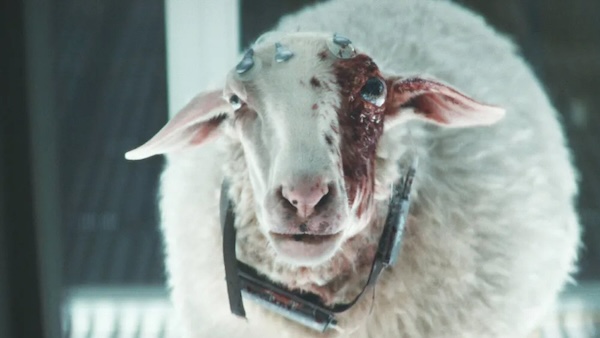
Kavalier has recently shoe-horned the minds of a group of young teenagers into some rather nifty android/hybrids that he calls his “floor models,” and he’s all set to roll out his promise of cheating death when a big, fat spaceship full of organic horrors lands on his doorstep, including a bunch of alien eggs, insects that eat metal, that thing that hangs from the ceiling, and a rather intriguing eyeball on legs.
The idea of transplanting our minds into something a bit more reliable than the human body isn’t new. Enhanced performance, endocrine system stability, freedom from disease, and when entropy finally comes calling via a blown gasket or fried wiring, presumably we can hop aboard another android and carry on living.
After all, machines make things so much easier, don’t they? Remember all those post-war gadgets that were sold to our mums and grandmas? Vacuum cleaners. Washing machines. It’s quite a promise. Forget the drudgery, the boring repetitive stuff. Go out and do what you’d like to do with the extra time given to you. Play with your kids. Travel. Be creative – paint, sew, write, take photographs. Except, it doesn’t stop there. We had devastating, across-the-board job losses throughout the latter half of the twentieth century and, not satisfied with our labor, machines in the form of AI are now coming for our creativity, too.
It’s not that we haven’t had plenty of warning from our history books, or science fiction projections when considering what the future has in store when it comes to machines taking over our lives. Everything from the Industrial Revolution versus the Luddites, to John Conner versus Skynet, it’s all there for our perusal.
The Alien franchise in particular has been quite illustrative. Not only has it suggested we shouldn’t be sticking our noses into clutches of off-planet organic material, it also familiarizes us with the catastrophic horrors of robot malfunction. Ash (“always a little twitchy”), David (a psychotic God complex), and we’re kind of wondering about Bishop too, aren’t we? (How did alien eggs come to be in the escape module at the beginning of Alien 3?)

Alien: Earth initially serves to dispel our doubts. Along with the dream of immortality, we have the disastrous human crew aboard the USCSS Maginot, not only intent on sabotage, but contaminating the labs, forgetting to lock the lid of the monster bug container, and not following contamination protocols. (Even an ore tug like the USCSS Nostromo, currently chugging toward LV426 was, at the very least, nominally familiar with those.) Therefore, it’s easy to imagine a scientific ship, chock full of dangerous alien species, running much more smoothly with the bots in charge.
Except, we have a robot (Kirsh) pre-programmed, or self-evolving to hide its true loyalties, thereby becoming secretly an agent of chaos to those who have bestowed their trust. There’s also the uncanny valley effect that just won’t go away, coupled with the not-so-good idea of placing young adolescent minds into exemplary killing machines, until finally, Alien: Earth leans hard in the opposite direction and that lullaby of immortality looks more like a warning.
With all this going on, the xenomorph, possibly the best and most horrific space monster of all time, has to take second billing alongside its newly acquainted cohorts, the grubs, the flies, and the eyeball beast. Because the struggle here isn’t about man versus monster, it’s about us and what we’re afraid of losing.
Nothing to strive for and no fear of dying. Will reliance on machines ultimately strip us of our humanity, just as AI is already strip-mining our creativity? What will happen to us without conflict, struggle, and a sense of purpose? In Alien: Earth we appear to be floundering alongside the kidnapped species that arrived aboard the Maginot, and if so, who will ultimately survive to win the day?
What’s interesting, stepping back into the Prometheus timeline of 2093, the Engineers didn’t send machines and incendiaries to destroy us. No Skynet-style gunship fleets, no flying saucer death rays; no scatter bombs and nukes. Their method of attack was organic in nature which suggests organics might fare better than expected, and indeed could have the upper hand in any creature/machine conflict.
Humanity has a lot going for it. Love, ingenuity, treachery, and courage. We know only too well how to survive. But in this particular arena, if we do happen to lose out in a battle for supremacy, who’s going to win? The machines? The xenomorph? If I was around to make a bet, I know who my money is on.
