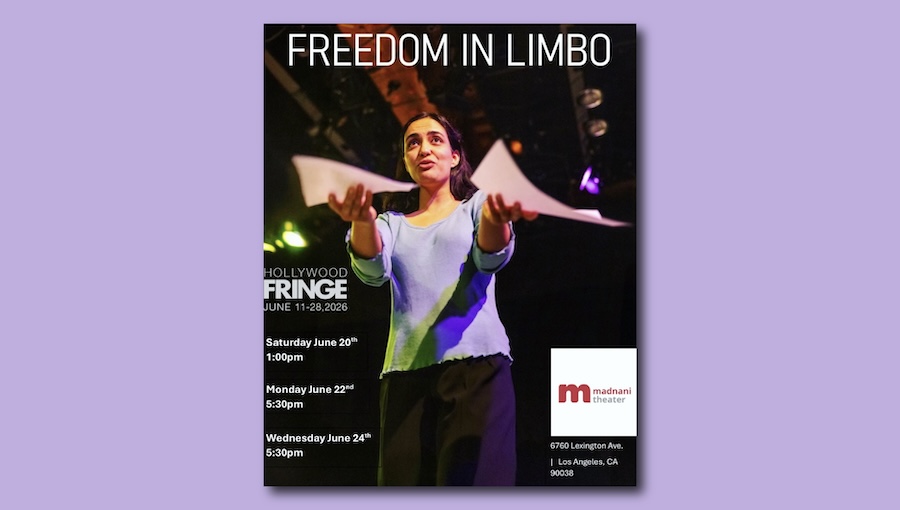
The following is an interview with Mozhdeh ‘Julia’ Rahmanzaei regarding the production, Freedom in Limbo, at the 2026 Hollywood Fringe Festival. In this interview, Fanbase Press Editor-in-Chief Barbra Dillon chats with Rahmanzaei about the genesis behind the production, what she hopes that audiences may take away from the show’s themes, and more!
Barbra Dillon, Fanbase Press Editor-in-Chief: Your solo production, Freedom in Limbo, will be appearing at the Hollywood Fringe Festival this summer. What can you tell us about the genesis behind the production, and how would you describe its premise?
Mozhdeh ‘Julia’ Rahmanzaei: The genesis of Freedom in Limbo comes directly from my lived experience as a banned artist in Iran. For years, I tried to continue my work as an actress while navigating restrictions, uncertainty, and constant barriers placed on artistic expression. Eventually, I reached a point where I could no longer continue in that environment and made the difficult decision to leave my country. At the same time, this story is not only personal. It reflects the experience of many Iranian artists who are either silenced, imprisoned, banned from working, or forced to leave everything behind in order to continue their artistic lives elsewhere.
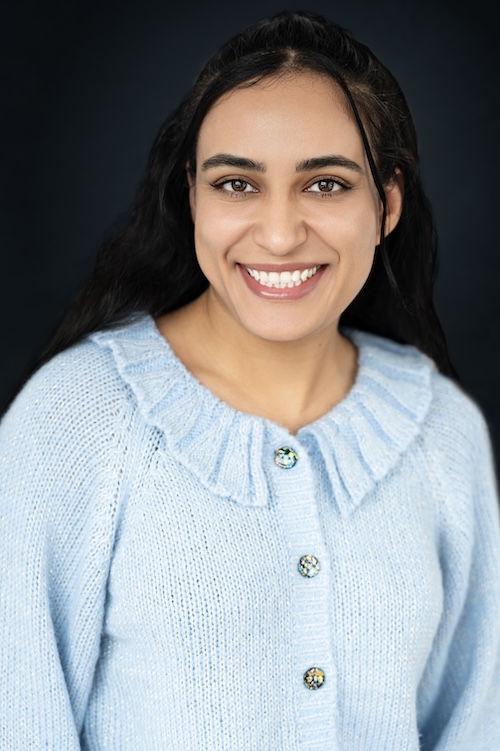
In that sense, the play carries a collective voice as much as an individual one. The production opens a window into the world of Iranian underground theatre, where many plays remain unseen, unfinished, or hidden while waiting for approval that may never come. It explores what it means to create art in silence and secrecy, and the emotional weight of living under constant limitation. At its core, Freedom in Limbo is about the cost of freedom, the price of leaving, the silence of staying, and the experience of living in between, where home slowly stops feeling like home.
BD: What can you tell us about your shared creative process in bringing this story to life on the stage?
MR: The first spark for this piece was waiting. It all began with a sense of having no path forward. It started with ‘No way to go, No way to stay’, as a short 20-minute solo performance for my thesis at the University of Washington, and over time it evolved through different stages of my life. After graduating from the University of Washington, the piece transformed into my performance in Seattle, as I Am an Actress, Where Is My Country. After my first meeting with my director, Jesimiel Jenkins, who was also my classmate, I felt very organic and collaborative. We were already familiar with each other’s work and had developed a strong understanding during our MFA program at the University of Washington. He really helped me a lot in developing and finishing the piece. We talked through many ideas together, shared our thoughts, and slowly shaped the piece step by step. It became something that grew out of our conversations and collaboration. And it became Freedom in Limbo.
Throughout this journey, waiting took many forms: waiting for a visa, waiting to immigrate, and even waiting for my father’s acceptance of my decision to become an actress, which took nearly ten years. I waited for permission to stage my work in Iran, work that was repeatedly rejected. I waited to leave my country, then waited for months to receive my U.S. visa. After arriving, I waited again to find my place as an actor in a new country, and to understand how an immigrant artist can carry both identity and art into a new home. Even after arriving, the waiting did not end. I have been trying to build a life here while living with the constant fear of losing the fragile freedom I have found. As political events and violence in Iran intensified over the years, my connection to “home” became more complicated, until I no longer felt I had a place to return to. My hope slowly shifted toward the possibility of making a new home elsewhere. Eventually, I placed all my dreams, my identity, and my life into a suitcase and left my homeland. This work is not only the story of an immigrant actor or a visa journey. It is the story of a human being trying to hold onto their identity while navigating loss and displacement.
BD: At Fanbase Press, our #StoriesMatter initiative endeavors to highlight the impact that stories can have on audiences of various mediums. How do you feel that this story may connect with audiences, and what, if any, conversations do you hope that it may inspire?
MR: I believe Freedom in Limbo connects with audiences because, at its core, it is about a deeply human experience: waiting, uncertainty, and the search for belonging. Even though the story comes from my personal journey as an Iranian artist, the emotions behind it are universal. Most people, in different ways, have experienced moments where they feel suspended between where they are and where they want to be. I hope the play opens conversations about what it means to pursue a life in art under pressure, and what is often invisible behind the decision to leave one’s country. It is not only about immigration in a political sense, but about the emotional and human cost of displacement.
I also hope it encourages reflection on artistic freedom and the quiet struggles of artists whose voices are often unheard. Ultimately, I want the audience to leave with a deeper sense of empathy, for those who leave, for those who stay, and for anyone trying to find a place in the world where they can fully experience. I am deeply inspired by the courage of the people of my country. This work is also dedicated to all the artists in Iran who are forced into silence, who are banned from working, who are in prison, or who have been killed simply for expressing themselves. It is also dedicated to those artists who have been forced to leave everything behind and continue their lives in exile. Each of us pays a price for freedom—whether through imprisonment, silence, or displacement. A part of this performance is devoted to them. This work is dedicated to all the artists and brave people who continue to fight for freedom, including those who have been killed in recent months.
Q: What makes the Hollywood Fringe Festival the best venue for Freedom in Limbo?
MR: I enjoy bringing my work to new places and sharing it with different audiences. The Hollywood Fringe Festival is especially meaningful because it hosts many performances every year, allowing a large and diverse audience to experience the work and respond to it. That feedback is very important to me, as it helps shape the future development of the piece. I also feel that this festival truly supports artists. It creates a space where independent voices can be seen and heard, which is exactly what I am looking for as an artist. I believe that in this environment, artists are given the opportunity to be heard, and that is the most important thing for me.
BD: The show will be appearing at The Madnani Theater from June 20-24, 2026. Are there any future plans to perform the show at other venues?
MR: At the moment, my focus is on bringing Freedom in Limbo to the Hollywood Fringe Festival and connecting with audiences there. It is very important for me to experience the work in front of a live audience and continue developing it through their responses. Looking ahead, I would love for the piece to have a continued life beyond the festival. My next potential step would likely be New York, as well as the possibility of bringing the show back to Los Angeles with additional performance dates, so more audiences can experience.
I will be performing on June 20, June 22 and June 24.
BD: Lastly, what would you like to tell readers who want to learn more about and purchase tickets for Freedom in Limbo?
MR: I would warmly invite audiences to experience Freedom in Limbo with an open heart. This is a deeply personal story, but one that reflects universal experiences of waiting, resilience, and the search for belonging. If this story resonates with you, I would be truly grateful to have you join me at the Hollywood Fringe Festival and support independent theatre by being part of this journey.
*Header Photo by John Curry
