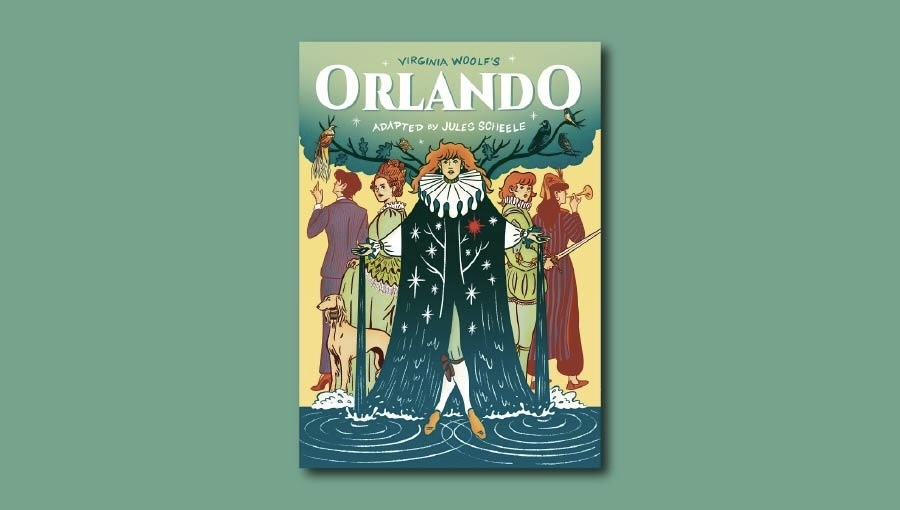
The following is an interview with writer/illustrator Jules Scheele (Sexuality: A Graphic Guide) regarding the upcoming release of the graphic novel adaptation of Virginia Woolf’s Orlando with Avery Hill Publishing. In this interview, Fanbase Press Editor-in-Chief Barbra Dillon chats with Scheele about his creative process in adapting the story to the sequential art medium, the themes that he hopes may resonate with today’s readers, and more!
Barbra Dillon, Fanbase Press Editor-in-Chief: Congratulations on the upcoming release of your graphic novel adaptation of Virginia Woolf’s Orlando! What are you most excited for readers to experience with this illustrated adaptation?
Jules Scheele: Thank you! I’m excited for new readers of Orlando to be introduced to the text – not only the original, but the myriad of amazing adaptations and art it has inspired over the years. I’m also hoping fans of the book will appreciate my point of view on it.
BD: The creative process of approaching an adaptation of a prior work – especially one as well known as Orlando – can be a daunting experience. How would you describe your approach to breathing new life into the story, and what did you find to be most rewarding/challenging about the process?
JS: Orlando is a book that was so ahead of its time. Aspects of it have dated for sure (the colonialism/orientalism, for one), but its ideas on gender and identity, and on rejection of conformity and binary thinking still feel radical today. Because of this, once I sat down to write the script, the book resonated so much with everything I had learned about the world and myself in the past ten years: about my own gender identity and our place in the world as queer people generally. Everything I wanted to say with it was already right there in the text.
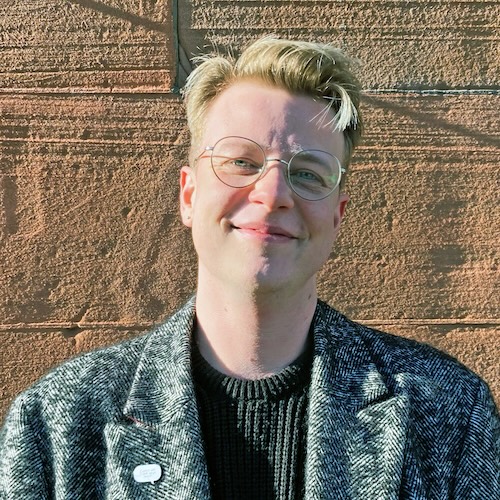
On the other hand, I really had my work cut out for me trying to fit everything important in, without overloading the book with text. There were massive amounts of picture research to be done, as well – I don’t exactly stick to historical accuracy religiously in the book (as the original has a loose and magical sense of time itself), but clothes, places, and objects still had to look right to ground it.
BD: At Fanbase Press, our #StoriesMatter initiative endeavors to highlight the impact that stories can have on audiences of various mediums. How do you feel that Orlando’s story will connect with and impact readers, and what, if any, conversations do you hope that it may inspire?
JS: The biggest hope you can have when you release a book is that it will connect with people emotionally. I wanted to make this adaptation to celebrate the original book and its ideas, but also to connect our shared history as queer people across time, emphasising freedom of expression, hope, and resilience: things that connect us as a community. We’ve always been here and aren’t going to go anywhere. I hope that connection can bring comfort and hope to others in these hard times.
BD: What makes Avery Hill the perfect publishing partner for this story?
JS: I’m honestly so pleased to be able to work with Avery Hill on this. Not only did they approach me with the idea, but they also let me be as creative as I wanted with it. They listened to my ideas and supported my decisions from the script to the design of the book. There was a lot of trust that I would eventually deliver something that was as good as it could be, and a lot of patience with how long it takes to work on a graphic novel like this alongside a day job. You can tell from AHP’s entire catalogue that these are people who genuinely love comics and the possibilities of comics as an art form. I think that is so rare these days, and it’s massively difficult to keep going with this kind of ethos. They’re a really special publisher.
BD: The graphic novel was successfully funded this year via Kickstarter. Why do you feel that crowdfunding has become such a vital resource for independent creators and publishers?
JS: With arts funding being drained all over and print production costs rising, there really aren’t that many alternatives. The making of the book was funded by Creative Scotland, and I’m glad that the Kickstarter was there on top of that, so we could make sure the printed book itself will be as nice as we can make it. The response on Kickstarter blew me away – I’m so grateful to everyone who pre-ordered through it!
BD: Are there any other projects – past or current – that you would like to highlight for our readers?
JS: My past collaborations with Dr. Meg-John Barker – a non-fiction series of gender studies graphic guides, out through ICON Books (Queer: A Graphic History, Gender: A Graphic Guide, and Sexuality: A Graphic Guide) are still available from any good bookshop, and I’m still really proud of them! A lot of young queer people have gotten them for family and friends to help them understand our lives and our history. I also make zines and prints in my spare time, which you can find in my online store (www.julesscheele.com/shop).
BD: Lastly, what is the best way for our readers to find more information about Orlando and your other work?
JS: My work can be seen on my portfolio website (www.julesscheele.com), or under @julesscheele on Instagram. For Orlando, I recommend just reading the book itself, or watching Sally Potter’s 1992 adaptation starring Tilda Swinton. I also recommend Orlando: My Political Biography from 2023, a documentary by academic and activist Paul B. Preciado, starring 26 contemporary trans and non-binary people (aged 8-70) as Orlando and themselves.
