The following is an interview with Lisa Diedrich and Briana Martino regarding the recent release of Keywords/Keyimages in Graphic Medicine as part of the Graphic Medicine Series with Penn State University Press. In this interview, Fanbase Press Editor-in-Chief Barbra Dillon chats with Diedrich and Martino about their shared creative process of bringing the Graphic Medicine narratives to life on the page, how they hope that this collection may connect with readers, and more!
Barbra Dillon, Fanbase Press Editor-in-Chief: Congratulations on the recent release of Keywords/Keyimages in Graphic Medicine! What can you share with us about the genesis behind this collection of Graphic Medicine works, and, for those unfamiliar, how would you describe the genre of Graphic Medicine?
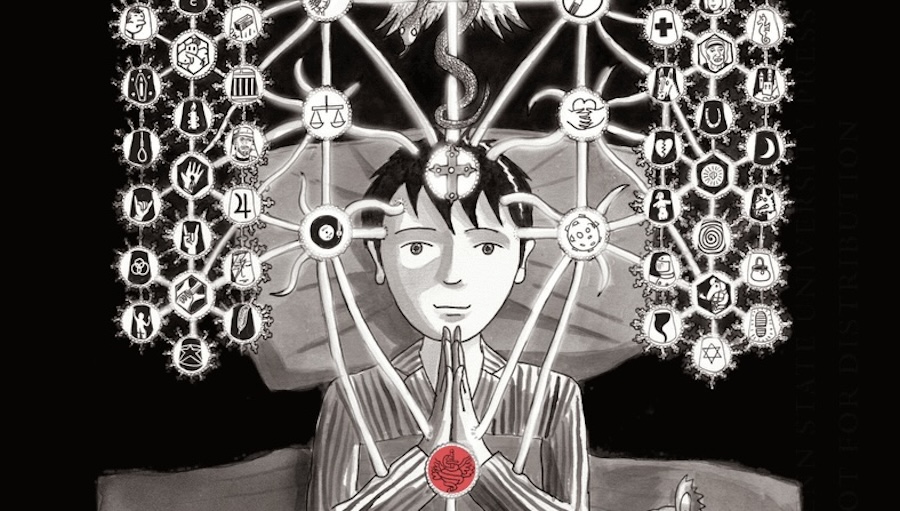
Lisa Diedrich and Briana Martino: Thank you! We have been working on this project for a long time and so we are thrilled to have it out in the world. The term “graphic medicine” was coined by Ian Williams, who is a general practitioner and comics artist, in 2007 for a website (graphicmedicine.org) he created that became a virtual space for a community of artists, academics, health care providers, authors, and fans of comics and medicine. Ian is also in the book and the image from his chapter on OCD is on the cover, which we felt really encapsulated the project. The graphic medicine website was the beginning of what would become a field of study, as well as an international movement of folks interested in the role comics can play in the delivery of healthcare and as a form for exploring the experiences of illness, disability, and trauma. The first inklings of the project that would become Keywords/Keyimages in Graphic Medicine came after the 10th annual Graphic Medicine conference in 2019 in Brighton when we began having conversations about doing a book on the state of the field of graphic medicine. We are both cultural studies scholars and so have been influenced by cultural theorist Raymond Williams’ concept and practice of keywords analysis, as a way of demonstrating a field in action. Yet, immediately, we also realized we needed to signal what makes the comics form so special—the combination of words and images. We created a couple of neologisms—keywords/keyimages and keyimages—to try to suggest this unique aspect of the form.
BD: As editors for the collection, how would you describe your thematic approach to crafting a complementary collection of stories that would encapsulate various narratives within Graphic Medicine?
LD/BM: Like many other keywords projects, ours was inspired by Raymond Williams’ book, Keywords: A Vocabulary of Culture and Society (1976). Williams’ book is organized alphabetically, which is in keeping with his own indexical and non-hierarchical way of structuring his keywords volume. We initially followed Williams and organized Keywords/Keyimages in Graphic Medicine alphabetically. But in thinking about the experience of reading and teaching the volume, and in very helpful conversations with the editors of the Graphic Medicine book series at Penn State University Press, we realized a thematic approach would be more user-friendly and accessible to the mix of readers we hope will engage with this text. We decided to organize the contributions into five sections: practice (ways of reading), pedagogy (ways of teaching and learning), process (ways of making), personal/autobiographical (ways of documenting), and politics (ways of doing). Before each section, we briefly introduce the theme and the individual keywords/images included in the section, as well as some questions for discussion, which we hope will provide helpful hints for how to engage and teach the material. The thematic structure works to link entries with similar approaches or styles, but we also wanted to encourage links between entries across the sections. Thus, we note at the end of the entry other entries in different sections to see. This echoes Williams’ volume and demonstrates the phenomenon of how words and images act as a kind of structure for graphic medicine.
BD: Are there any stories and creators that you would like to highlight from the book?
LD/BM: We are so grateful to all 41 of our wonderful contributors to Keywords/Keyimages in Graphic Medicine. This type of project can feel like herding cats, but, truly, our contributors have been so supportive and patient throughout the process. One of the things we love about the book is that it is a real mix of Graphic Medicine in action. We have contributions from comics artists, health practitioners and carers, people with various illnesses and experiences of healthcare, and academics and scholars of comics and graphic narratives. There are some contributors, like Ian Williams and MK Czerwiec, who combine all these skills. We also really appreciated the diverse artistic and writing styles of our contributors, and that variety is a strength of the volume. Finally, we think another strength of the volume is that we bring together both well-known and up-and-coming comics artists and scholars. Brian Fies, author of the classic Graphic Medicine text, Mom’s Cancer, is featured, as is Maia Kobabe, whose book, Gender Queer, has been the most banned book in the US for the last several years, just to mention two of our more well-known contributors. There are also contributions from people who are at the forefront of recent initiatives in graphic scholarship, using comics as a research method. For example, we include contributions from Kay Sohini and benjamin lee hicks, who have both recently completed graphic dissertations.
BD: At Fanbase Press, our #StoriesMatter initiative endeavors to highlight the impact that stories can have on audiences of various mediums. How do you feel that Graphic Medicine stories like those collected here may connect with and impact readers?
LD/BM: The hybrid verbal/visual form of comics helps medical practitioners, patients, families, and caregivers creatively reimagine the boundaries of health, illness, life, and death. As Ian Williams has clarified, the medicine in graphic medicine is not only a reference to the institution of medicine but also understood more broadly as a form of care and a kind of remedy for transforming individuals and institutions more generally. This notion of graphic medicine as remedy is important as we consider the widespread appeal of graphic medicine across numerous disciplines and institutional spaces. Graphic Medicine also emphasizes and encourages storytelling as resistance against the stigma, isolation, dehumanization that often accompanies experiences of illness, disability, and trauma.
BD: What makes the Graphic Medicine Series the perfect home for this collection?
LD/BM: Mainstream and academic presses are publishing more and more titles that come under the graphic medicine umbrella. Pennsylvania State University Press’ Graphic Medicine series publishes both graphic pathographies and more scholarly work, as well as volumes like Keywords/Keyimages that seek to bridge and combine self-reflective and analytic approaches. It has also been the home of texts like the Graphic Medicine Manifesto (MK Czerwiec, et al. 2015), which offered an important early articulation of the aesthetics, pedagogies, and politics of the field. The Graphic Medicine Manifesto, and other books in the Graphic Medicine Series such as Pathographics: Narrative, Aesthetics, Contention, Community (Squire and Krüger-Fürhoff, 2020) combine essays with author-curated graphic narrative excerpts. Our project is somewhat formally aligned, also pairing images and texts to provide a series of snapshots of a field in action. Like the Graphic Medicine Manifesto, our keywords/images project is designed to contest the methods by which we create scholarship, “offering a more inclusive perspective of medicine, illness, disability, caregiving, and being cared for” (2). Among the larger and expanding project of graphic medicine, it is fitting that Keywords/Keyimages would find its home in the Graphic Medicine Series.
BD: Are there any other projects – past or current – that you would like to share with our readers?
LD/BM: Yes! Bri has been collaborating with a group of Boston-based graphic medicine scholars and practitioners on a 2026 New England Graphic Medicine Summit (NEGM). This summer, Lisa will be a fellow in the Centre for Medical Humanities and Bioethics at Linköping University in Sweden to lead a seminar on Graphic Medicine in Action. Together, we’ve been collaborating on an article about “The Comic as Site” in a forthcoming book, Constructing Sites, edited by Angela Woods and Des Fitzgerald. The article considers graphic medicine and graphic journalism as sites of interdisciplinary research collaboration.
BD: Lastly, what would you like to tell readers who want to learn more about Keywords/Keyimages in Graphic Medicine and your other work?
LD/BM: Connect with us over email or socials (@lisadiedrich.bsky.social, @ldiedrich; @briwok.bsky.social, @bri.wok). Connect with Keywords/Keyimages contributors and support their work. We are currently scheduling a number of in person and virtual events this year, both in more formally academic and more general comics-centered formats and spaces. We are especially interested in events that highlight the work of individual contributors in their local areas. We will be joined by about ten Keywords/Keyimages contributors for a panel at the Graphic Medicine Conference in Baltimore this July. We have both benefited immensely from the generosity of the graphic medicine community and the Graphic Medicine conferences have been a key part of that.
