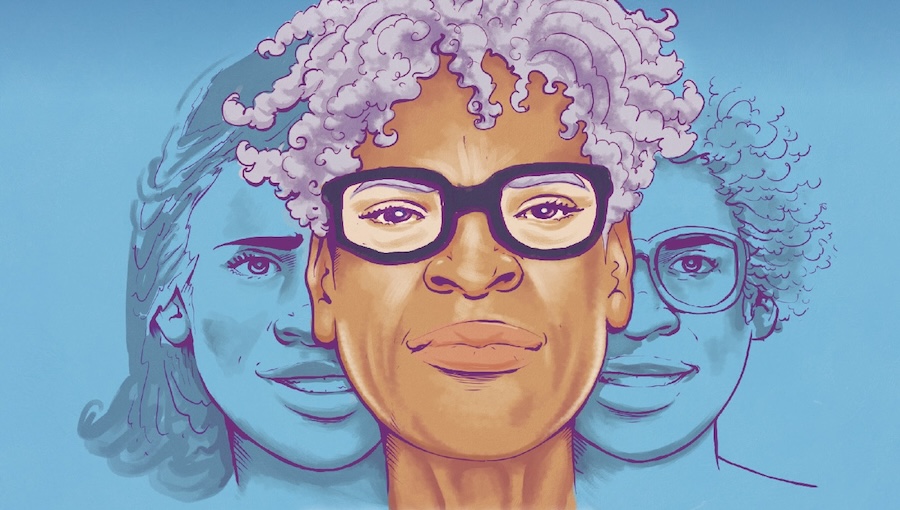
The following is an interview with journalist, producer, and author Angélique Roché regarding the release of the graphic novel biography, First Freedom: The Story of Opal Lee and Juneteenth, with Oni Press. In this interview, Fanbase Press Editor-in-Chief Barbra Dillon chats with Roché about her shared creative process in bringing Dr. Lee’s life-long work in advocacy and activism to life on the page, the ideas and messages that she hopes will resonate with readers, and more!
Barbra Dillon, Fanbase Press Editor-in-Chief: Today sees the release of First Freedom, your graphic novel biography of Dr. Opal Lee and her incredible, life-long work in advocacy and activism. What can you share with us about the genesis behind your decision to document and share Dr. Lee’s story with readers?
Angélique Roché: I can take little credit for the initial idea to chronicle Dr. Lee’s life in a graphic novel format. I was blessed enough to be approached by Oni Press, which was searching for a writer for the project. I will say, thanks to the leadership at Oni Press, I was given a lot of agency over the process of capturing Ms. Opal’s history and the structure of the story.
BD: How would you describe your creative process in both researching and crafting the visual narrative behind this story, as well as collaborating with artists Alvin Epps, Bex Glendining, and Millicent Monroe to bring the narrative to life on the page?
AR: The process was more alchemy than anything.
It started with a research scan and prep of what was widely known of Ms. Opal’s life. Next, I wanted to get on the ground in Fort Worth. I went with a team to record Ms. Opal’s community and interview her and her family.
Then came the hard part: digging for the less well-known, often overlooked pieces of Fort Worth, Texas, and US history, and integrating them with both the larger historical events and the incredible life of Ms. Opal. Needless to say, there is so much I couldn’t fit into the book.
I also relied a lot on photos. I made it a priority to identify reference photos and videos, especially those that affected panel descriptions or plot points, as well as images of chronologically important aspects such as clothing, cars, hairstyles, and societal norms that shaped the larger narrative. Ultimately, my editor and I, Megan Brown, determined it would be essential to provide artists with a separate script of reference visuals and historical descriptions, adding another layer of narrative to the book. I feel like this allowed the artist to really dig in without worrying about small, but important, details.
In addition, I have to shout out the book’s colorist, Damali Beatty, who was invaluable in bringing First Freedom to life. I really wanted to make sure that the book was fully representative of the full spectrum of people and their skin tones and that once a main character’s skin tone was determined, we worked diligently to ensure that the skin tone remained consistent throughout the book. I don’t put it lightly when I say, Damali knocked it out of the park.
BD: At Fanbase Press, our #StoriesMatter initiative endeavors to highlight the impact that stories can have on audiences of various mediums. How do you feel that Dr. Lee’s story may connect with and impact today’s readers, and what, if any, conversations do you hope that it will invite?
AR: Often, we are told to “never meet our heroes,” but I can genuinely say that meeting Dr. Lee, learning about her life, and discovering how substantial an impact she has made has changed my life. Despite what she has lived through, the obstacles that some tried to throw at her, including living through Jim Crow segregation, she leads with her heart guided by empathy to honor ALL people, valuing their existence and striving to be the change she wants to see. That is something we need more of.

BD: What makes Oni Press the perfect publishing partner for this book?
AR: I can honestly say, this book could not have been published in this way, anywhere else. Oni’s leadership understood and continues to understand the value of stories like Dr. Lee’s, supporting not just diversity but creator-led creativity. That was reflected in the autonomy I was given to develop a research plan, be hands-on in Fort Worth, and in the collaborative, creative process that resulted in First Freedom.
BD: If readers are interested in learning more about Dr. Lee’s work and getting involved in activism themselves, what, if any, resources might you suggest to get them started?
AR: Well, I’m glad you asked that. One of the unique things about First Freedom is that the book includes over 140 citations, sources, references, a robust timeline, and a further reading list so that readers can continue to not only learn about Dr. Lee’s life but also the history behind Juneteenth and other key events included in the book.
BD: Lastly, what would you like to tell readers who want to learn more about First Freedom: The Story of Opal Lee and Juneteenth and your other work?
AR: Read the book and be ready to dig in, you won’t regret it!
