
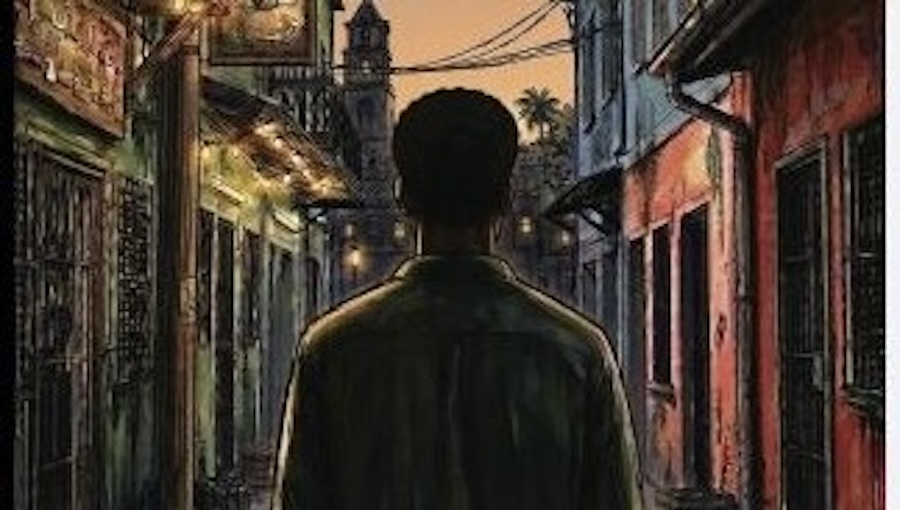
The following is an interview with Carlisle Richardson regarding the upcoming release of the novel, The Soft Underbelly, through Hansib Publications. In this interview, Fanbase Press Editor-in-Chief Barbra Dillon chats with Richardson about the creative process of bringing the world and characters to life on the page, the themes that may resonate with readers, and more!
Barbra Dillon, Fanbase Press Editor-in-Chief: Congratulations on the upcoming release of The Soft Underbelly! How would you describe the story’s overall premise, and what was its inspiration?
Carlisle Richardson: Thank you very much. It is an absolute pleasure to be speaking with you. The Soft Underbelly is a political thriller taking place on a Caribbean island, involving murder, political instability, corruption, and the threat of war. It revolves around two investigators, local police officer Gerald Brookes, and M16 agent Fiona Sawyer, trying to find the links between the murder of a young customs agent, an attempt to overthrow the sitting prime minister, an international weapons trafficking ring, and a mysterious expat living on the island.
My inspiration for writing fiction came from my desire to tell accurate Caribbean stories. I was often a bit disappointed in the way the region was being portrayed in crime fiction, and in films. We were often in the background with the supporting characters helping to carry someone else’s narrative. So, that was the initial motivation in incorporating my reality into my favourite genre.
The Soft Underbelly specifically was inspired by observations, news articles, and events throughout the years. I’m not sure if I could pinpoint any specific motivator for this novel, but over the years, as different ideas and plot points arose, I wrote them down. Then, the story started forming gradually, and with the beginning in place, the rest started flowing.
BD: What can you share with us about your creative process in bringing the story and characters to life on the page?
CR: I’ve always been a bit haphazard with the beginning of the creative process. I try to always keep a pen and paper with me because I never know when an idea for the plot will hit. But once the story starts forming, it remains on my mind until it starts taking shape, and I would very often be writing about the plot or the characters as they come to me. This though is not normally in any structured or linear way. Sometimes, the conclusion would come before the beginning, and other times a turning point in the middle of the story would be the first thought I have.
My main characters normally begin very one dimensionally. One personality trait, or one singular motive. But once the plot and main characters are identified, I start being more focused on how I want the story to progress.
The hardest part is the character development, but once I start understanding what makes them tick, I begin fleshing out the outline.
I do enjoy crafting the outline, and when I start the structured part of the writing process that is the first step. I love exploring where the story will take me. Then I flesh out the characters, making them more multidimensional and realistic, with flaws, varying degrees of motivation, and a backstory.
Once I’m happy with the outline and characters, I get much more disciplined in writing the first draft.
BD: At Fanbase Press, our #StoriesMatter initiative endeavors to highlight the impact that stories can have on audiences of various mediums. How do you feel that this story might connect with and impact readers, and what, if any, conversations do you hope that it may inspire?
CR: I think persons who don’t often see themselves featured in international crime stories will connect with this story. Persons from the Caribbean, the Pacific Islands, the Indian Ocean islands, and their respective diaspora communities will be able to relate to the characters, the place, and the situations. I believe they will feel seen and appreciate this. For other people from the global South, they will be able to identify with much of what occurs and welcome this familiarity that they don’t often read about.
For all fans of the genre, I hope they love the story and appreciate the local perspective. And I sincerely hope they connect with the place. The island is another character in this story, and I hope a strong attachment is formed with the place.
I truly hope this story gets people who are not familiar with the region to view the Caribbean differently. Too often, in my travels, people’s questions and observations about the Caribbean are based on inaccurate portrayals in books, films, and television. I want them to start questioning the portrayals and be inspired to find out for themselves. When they see who we truly are, they will hopefully explore more of the works from the native writers of the genre. I definitely want conversations taking place about what is the true Caribbean, and how we can see more of this in popular culture, emerging from reading this book.
BD: What makes Hansib Publications the perfect publishing partner for this story?
CR: Hansib Publications has been promoting the Caribbean reality for over fifty years. They started as an outlet for news about the Caribbean to be disseminated to the Caribbean diaspora living in the United Kingdom. They then saw the need for the Caribbean experience to be told, and they expanded to preserving Caribbean stories and promoting new Caribbean voices on the international literary stage. I felt a connection to them because of their desire to offer a true representation of the Caribbean and its people.
BD: Are there any projects – past or current – that you would like to highlight for our readers?
CR: My first publication, Island Journeys: The Impact of the Island Way of Life at Home and Abroad, much like The Soft Underbelly, was written out of a desire to offer a more accurate reflection of island life, away from the narrative of just being tourist destinations, or vulnerable countries needing aid every time a disaster strikes. And last year, I published a Children’s Picture Book entitled Rose Grows Veggies, which addressed sustainability, making new friends, the importance of community, and the joys of gardening. These two books, along with The Soft Underbelly, give different aspects of Caribbean life which I hope will resonate positively with readers of all ages, around the world.
BD: Lastly, what is the best way for our readers to find more information about The Soft Underbelly?
CR: My publisher Hansib Publications would be the best place to learn more about The Soft Underbelly. Their website is www.hansibpublications.com, and their email is info (at) hansibpublications (dot) com. The book will also be available through Amazon, bookstores, ebook formats, and other online sellers.
