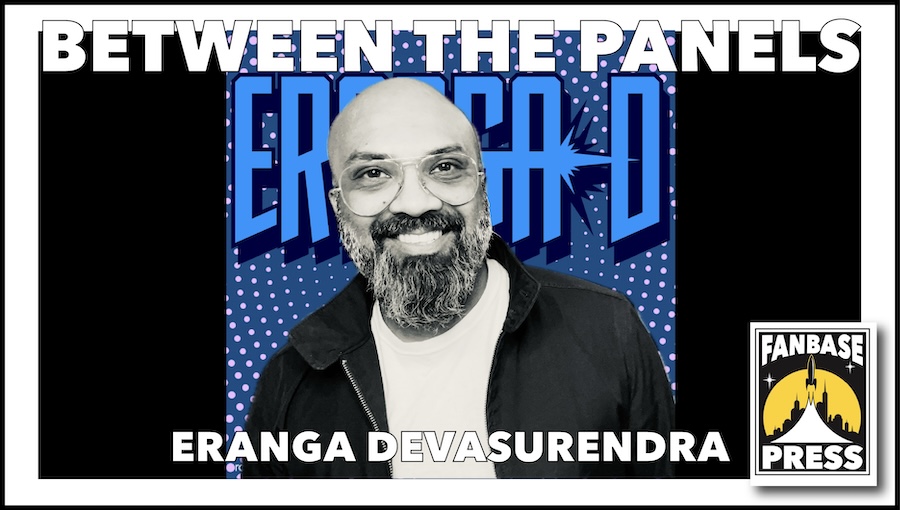
“Between the Panels” is a monthly interview series focusing on comic book creators of all experience levels, seeking to examine not just what each individual creates, but how they go about creating it.
Most comic creators start outside the factory looking in, but then there are some who start so far outside the factory that even looking in might seem daunting. Case in point: Eranga Devasurendra who, growing up in Sri Lanka and Dubai, had a challenge just acquiring comics to read, never mind making them… but some talent will not be denied.
First off, the basics…
Your specialties (artist/writer/inker/etc.): Artist
Your home base: Birmingham, Alabama
Social Media
Facebook: @thevitruvianfan
IG: @eranga.d.art
Fanbase Press Contributor Kevin Sharp: What is it about working in the comics medium that appeals to you?
Eranga Devasurendra: It’s the great equalizer in creative and visual storytelling, uncoupled from a budget. No idea is too big and there’s no limitation to the type of story you can tell. We live in a world where Brubaker and Phillips’ Criminal, Vaughan and Staples’ Saga and Absolute Batman can co-exist (and thrive). The rise of indies and Kickstarter models has democratized the medium even further. When done right, comics can provide a level of stimulation that neither prose nor film/TV individually can.
KS: Let’s begin with your journey as a fan. Please tell readers where you grew up and what types of material filled your creative mind — movies, cartoons, books, TV. We’ll get to comics next.
ED: I was born in Sri Lanka and my family moved to Dubai when I was 5. I didn’t speak any English when we first moved there and almost everything on TV was in Arabic, which I didn’t speak either. There was a single English channel on Dubai TV (Channel 33) and I was always drawn to the fantastical. The cartoons started at 4 p.m. every day and it was a steady diet of He-Man, Gobots, G.I. Joe, M.A.S.K, Centurions, Visionaries, and Transformers.
Later in the evenings, we moved into the pinnacles of ’80s garbage TV. I distinctly remember a cheesy TV show called Manimal about a dude who could — you guessed it — transform into different animals. I was heavily into vehicular shows like Blue Thunder, Airwolf, Street Hawk, and Knight Rider.
My folks would buy my brother and me paperbacks and I was a voracious reader. My earliest obsession was the works of British writer Enid Blyton: The Famous Five and The Secret Seven. As I got a little older, it was all Hardy Boys. I couldn’t get enough of those books and the fact that they were 58 original volumes meant it was my earliest introduction to the art of obsessive collecting.
KS: As long as you’re mentioning ’80s TV classics, we’ve also got to give a shout-out to Automan! Now, what about comics? Did you have access to those early on?
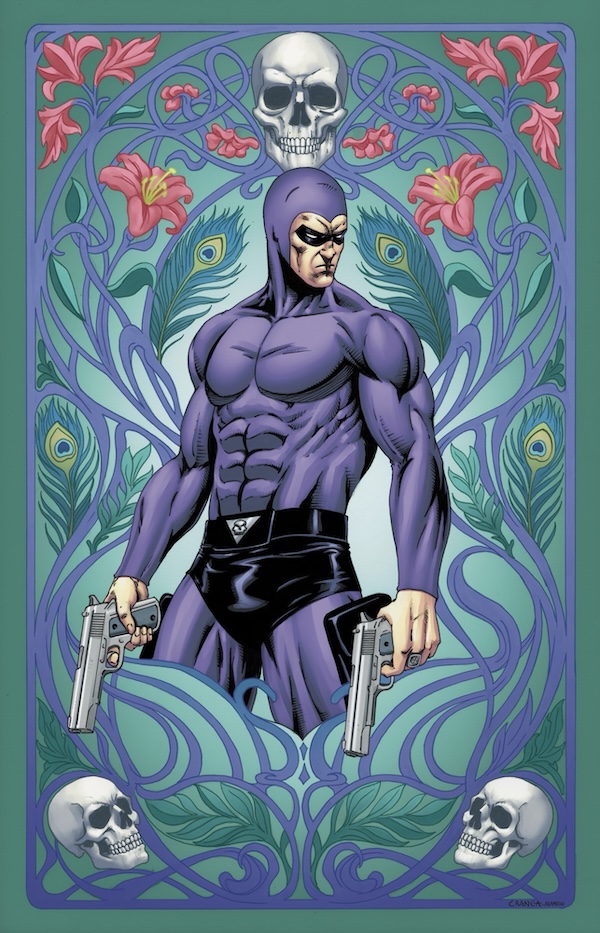
ED: Our neighbors in Dubai were from India and they always had comics around the house which I was allowed to borrow. These were both oversized Indian reprints as well as digest-sized books. When I was about 6, I remember my earliest comics were Asterix, Tintin, The Phantom, and Archie. I also read digest-sized editions of the Perez Teen Titans run. While I enjoyed those, nothing really clicked or proved to be a gateway to a lifetime as a comic reader. What they did do was introduce me to the language of comic storytelling. They primed the pump for when I was 9 and discovered “modern” Marvel floppies accidentally at the airport and there was no turning back from there.
KS: At Fanbase Press, our #StoriesMatter initiative endeavors to highlight the impact that stories can have on audiences of various mediums and about the way a reader can find an important story at just the right time. What was a comic book story you read when younger that had a real impact on you?
ED: My whole journey into what I do in comics today begins with The Incredible Hulk #383 by Peter David and Dale Keown. I watched the Incredible Hulk cartoon and TV show and was only exposed to that single version of the Hulk. In #383, seeing the Hulk talk in complete sentences and be funny and sarcastic blew my mind. And to top it off, the subplot was an intro to the Infinity Gauntlet crossover and the book ended on a cliffhanger with the Hulk being sucked into a portal. About a month or so later I found #384, realized it followed on from the previous book, and I connected the dots to what those issue numbers at the front of the book meant. I was head over heels with the comic and hungry for more.
It was the first book that forced me to flip back to the credits page and find out the names of the people who brought it to life. Because I couldn’t quite grasp “penciler” and “inker” (Mark Farmer) at the time, Peter David was easily identifiable as the guy responsible for the words. I loved the art and Dale’s unusual last name stuck with me. He was my very first artistic hero. I had always drawn as a kid, but Dale got me into superheroes and I copied his work over and over again. To this day, the way I construct a screaming mouth has a direct line to Keown’s work.
KS: Since you were lucky enough to find sequential Hulk issues, did that mean you were able to start collecting comics at that point?
ED: Finding the connection between Hulk #383 and #384 unlocked the Matrix for me. I immediately started grabbing every title I could find. At first, the majority of comics buying for me was at the airport bookshop but then I found them at supermarkets, too. The next part of the puzzle was talking to people who worked at the supermarket and discovering that all new comics arrived on Thursday. Usually, there were only 2-3 copies of each issue that they carried, so this was crucial to know. My brother and I would sometimes have to take on missions to walk to multiple supermarkets to find an issue we wanted.
KS: What were the first titles you actively kept up with vs. those you’d only read random issues of?
ED: Dubai had a limited selection of monthly titles to pick from and there was no rhyme or reason to which ones made the cut. I immediately gravitated to Marvel so I picked up every available title they had. This meant Hulk, Uncanny X-Men (but not adjectiveless), X-Factor, X-Force, Avengers, West Coast Avengers, Amazing/Spectacular/Web of Spider-Man (but not adjectiveless), Iron Man, Captain America, and Thor. Because of the limited selection, there was no randomness — I collected them all.
The timeline gets a little fuzzy here but at some point, a buddy of mine and I discovered the American Entertainment ad in comics and would pool our money together to order back issues and new releases from the US. We would do this a couple times a year. This is where the editorial caption boxes in comics back then really came in handy. We would make notes through the year based on the “as seen in issue #X” notes to build our order list. As an aside, when the packages got to Dubai customs, they would open the boxes, review the books, and then throw them all in a black garbage bag for delivery to my dad’s office. One of my fondest childhood memories is remembering my dad coming home with a black garbage bag slung over his shoulder. He was comics Santa twice a year.
KS: I love that image. Moving to your artistic side, it sounds like you were a big reader as a kid. Was writing a hobby for you, or were you more drawn (No pun intended.) to the visual arts? Or both?
ED: Definitely both. I would draw regularly as a kid and this accelerated significantly when I found comics. I did a fair amount of writing at the time, too. These were mostly short stories and I would contribute to local magazines. My earliest published work was when I was about 13 years old in a magazine called Junior News. It was a 5-page short story about a group of childhood friends who thought they had uncovered a diamond heist. The structure of the story was heavily influenced by the work of Enid Blyton. The magazine used a staff artist for some of the illustrations that accompanied the story and I remember being a little bummed I didn’t ask to draw those myself.
KS: Looking back, was there a particular “big deal” art project you accomplished that felt especially satisfying?
ED: There were two specific ones at different times in my life. The first was when I was 5 years old. My parents entered me in a live art contest against kids of all ages (as old as 12). I took first place in that and I remember my folks being really proud of that. It probably helped my confidence at the time and energized me to keep drawing.
The second was when I was about 17. A buddy of mine wrote a 30-page comic script and I drew it. The story was heavily influenced by The Darkness and Witchblade comics and I was ripping off Marc Silvestri and Michael Turner left and right. All the pages were drawn on A4 copy paper and I remember being super proud of it. Of course, we didn’t make any copies of it and it was eventually lent to a friend to read and lost forever.
KS: Was the idea of working in the arts something you ever considered early on?
ED: Growing up where I did in the time period I was in, there was zero thought given to art as a profession. Imagining being a comic artist was as ludicrous as being a movie star or rock god. There were distinct cultural and geographical limitations to it. The internet was in its infancy, so besides some niche IRC groups, message board culture for comics hadn’t really taken off. I loved comics and drawing, but it was always a hobby. I moved to the US for college when I was 18 and drawing time started dwindling significantly. What was once a daily activity became a weekly one, then a monthly one then even rarer. I entered the workforce and drawing seemed like this quaint thing I used to do.
Around 2017 or so, I reconnected with a childhood friend (Hey, Niraj Patil!) who had made a career in graphic design and we reminisced about our time in Dubai reading comics. He berated me for giving up on drawing. This shaming got me to buy an iPad and start drawing digitally. I found this really helpful because I could take it anywhere without being tied down to pen and paper. Pretty soon I found myself doodling during work meetings and I knew the bug was back. Then, the pandemic and lockdowns happened and I found myself with a lot of extra time on my hands. I decided to start drawing traditionally again and in May 2020 started putting my stuff on social media. This led pretty quickly to commission opportunities and my first published cover work, and that’s the ride I’ve been on ever since.
KS: Was that first published cover your first pro gig, as well? What was the balance for you between steps you took to put your work out there and those kinds of right place/right time “happy accidents” we can’t control?
ED: My first published cover and paid gig are intertwined. I did them back-to-back in 2021 but they were released in reverse order of when I did them. The first published gig I was paid for was a triple connecting cover for Stake Presents: Jessamy (so technically 3 covers covering issues 1-3). The second was for a book called Canceled. Canceled just happened to be published first. Both properties are by David A. Byrne who eventually became my co-creator on our book, Aeternal.
David had been pointed to my work by someone who followed me on social media and had seen my commissions shared on a Facebook group called Sketch Prices. I cannot emphasize enough how much people sharing my work in that group was instrumental to my success. I’d love to claim that it was my own social media presence that led to all the good fortune I’ve had to this point, but that’s not accurate. It was people who commissioned me and then chose to share that work on other platforms that helped me grow and brought opportunities my way. If I had to break it down, I would say starting my own social media was step 1 in advertising what I could do. The next break was someone reaching out to me for a commission. Them sharing that work on Sketch Prices led to more requests. That body of work helped establish that I was a real person, doing traditional art, and, most importantly, trustworthy to deliver a completed commission. Similarly, my first published work and word of mouth from David to other independent creators led to other opportunities in indies.
KS: What does your art/life balance look like these days? Do you have a steady daily or nightly routine, or does it vary based on what work is on your plate at any given time?
ED: I have a pretty steady routine. The missing part of this puzzle is that I still maintain a day job, but I’m fortunate I get to work out of a home office. I’m generally up between 5 a.m. and 6:30 a.m. every morning. I grab a coffee and do some drawing before I have to start work at 8 a.m. During my lunch break I’ll do some more drawing while wolfing down a meal. I’m done with work around 5 p.m. at which time I join my wife downstairs and we catch up on the day and have dinner. I have a drawing table in the living room so I start again around 8 p.m. while we watch TV and chat. I’m usually up till around midnight or later. Rinse and repeat during the work week. On the weekends, I draw around other scheduled activities and usually go to bed a little later, too.
I’ve maintained this routine for nearly 6 years now and understand it’s not sustainable. I also feel like I missed out on some prime years of artistic growth in the nearly two decades that I stopped drawing regularly so this is the price I have to pay. I’ve taken some steps over the last couple of years to mitigate some of this, including limiting my commission opportunities to 2-3 times a year. I find this structure to be really helpful and has helped me organize myself better. I love drawing so none of this feels like a chore or “work.” As long as that remains true and my body holds up, I feel like I have a few more years before both ends of the candle meet.
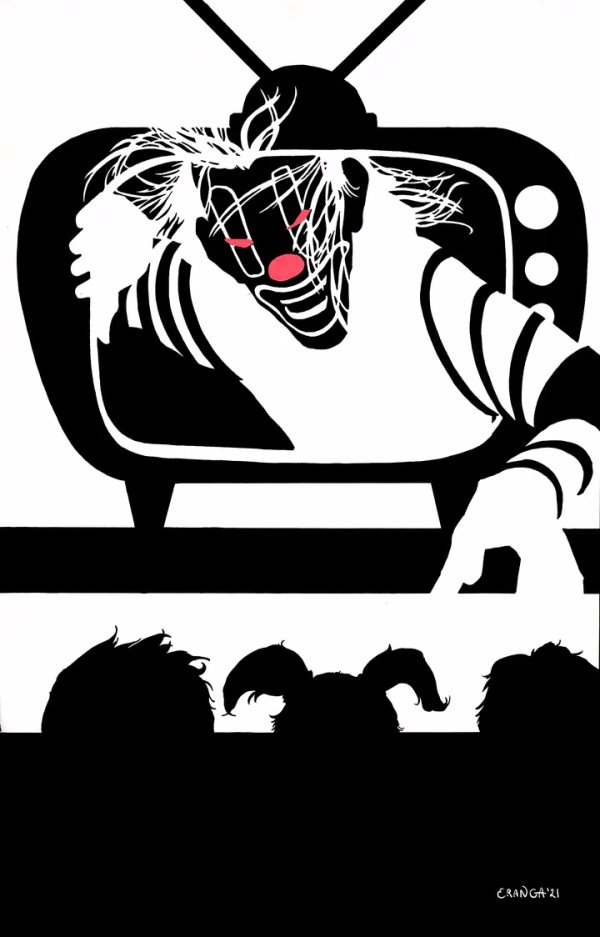
KS: Is the writing bug still lurking somewhere inside you, as far as that being something you’d like to have a go at, at some point?
ED: The timing of this question is funny because the writing bug has definitely returned and I’m doing something about it. I’m currently writing and drawing some short stories based in the Aeternal universe. I’ve got a 3-pager and a 5-pager under my belt and am currently working on the structure for a 10-page story that I’m really excited about. These will be published at some point in an anthology format. My co-creator/writer (David) has been very supportive during this process, which is a real boon because he could’ve been precious about control as a writer.
I’m having such a tremendous time with these shorts that I can see myself wanting to try my hand at something larger in the future.
KS: Hypothetical question: You can spend a day in the studio of any artist from comics history (dead or alive), sharpening pencils, getting their coffee, watching them work, asking questions, etc. Who’s your pick?
ED: Man, you’re gonna make me pick one artist? I’m going to exclude a modern great like Daniel Warren Johnson because he’s been really gracious about sharing knowledge and process online. You gave me an out with “studio,” so I’ll cheat and say Homage Studios. I would’ve killed to be there during their heyday and see the energy between Jim, Whilce, and Scott. Whilce in particular is a huge favorite of mine and was heavily influential in the rendering style of that era. Scott’s inks defined that generation of artists, as well. It would be particularly interesting to see the collaborations that occurred under deadlines and how layouts, finishes, and inks went down between those three. Specifically, I’d love to see how they contributed to each others’ styles.
KS: Speaking of DWJ, I know you’ve had the good fortune to hang out with/pick the brains of/get to know other current artists whose work you admire.
ED: I’ve been extremely fortunate to make friends with a lot of artists whose work I either grew up on or admire as a contemporary. I’ll pick just two here for various reasons:
David Williams was one of my earliest mentors. He was extremely generous with his time and advice during a period when I didn’t think my work was particularly any good. Over many phone calls and emails, he highlighted things in my work I needed to improve on and areas where he thought I was strong that I should focus on. There are people willing to lend you a critical eye, but David went above and beyond. He would send me pics and scans to illustrate his points and often redrew my work to drive home improvements. For a guy like me who never went to art school or had any formal training, this was invaluable. There are lessons David taught me that I still use daily.
Josh Cassara is a close friend and I’ve learned a ton about being (and acting like) a modern pro from him. He’s another dude who, despite having an insane current workload, is always willing to let me bounce ideas off him. Josh is incredibly generous about sharing knowledge and providing a window into the life of a contemporary professional artist working in mainstream comics. To wrap up the love fest, he’s also one of my favorite people to hang out and have a beer with.
KS: Hypothetical #2: Imagine a Comics Hall of Fame and you get to nominate one title that you feel represents the medium at its best. What gets your plaque?
ED: ONE title? You’re killing me here, Kevin. I’m gonna cheat again and split them up into “mainstream superhero” and “creator-owned,” and also share the pools I had to narrow down from.
In mainstream superhero comics, I have Hawkeye by Matt Fraction/David Aja and The Vision by Tom King/Gabriel Hernandez Walta, but I’ll nominate House of X by Jonathan Hickman/Pepe Larraz. It’s a terrific example of telling an engaging, new story without casting off continuity by creating an alternate reality or reboot. If you’ve read comics for nearly 4 decades like me, it’s hard to get a sense of wonder from a continuing saga like X-Men anymore. House of X had my head spinning and got me incredibly jazzed about reading a monthly book on day of release again. It doesn’t hurt that Pepe Larraz announced himself as THE artist of his generation.
Expanding beyond superheroes, the pool includes anything from Brian K Vaughan, Extremity and Murder Falcon by DWJ, but I’m handing the nomination to The Many Deaths of Laila Starr by Ram V and Filipe Andrade. There’s so much tenderness, philosophy, and whimsy packed into a book featuring the goddess of death as its lead. Five perfect issues gorgeously illustrated by Filipe.
KS: We’ll allow that level of cheating on the answer because they’re all great picks. Finally, please let readers know what you have out now and/or have coming out the rest of ‘26 and beyond.
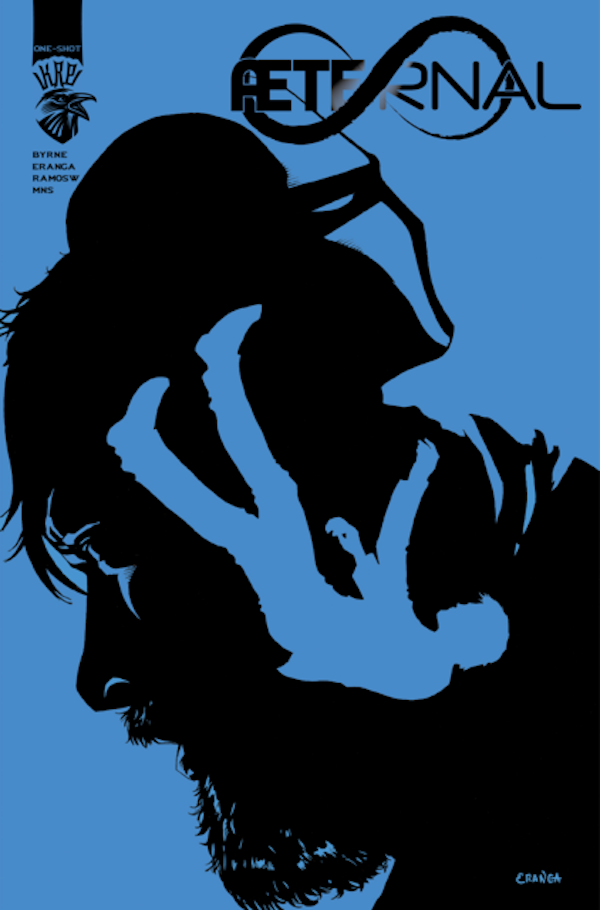
ED: Our book, Aeternal, has completed Kickstarter fulfillment and is currently available online (Aeternalcomic.com). It’s a 42 page self-contained story about the consequences of a human playing host to a superhero. We’re hard at work on the sequel right now and hoping to have it out in early 2027. As I mentioned earlier, I’m also writing and drawing some short stories to supplement the first volume of Aeternal. We haven’t quite cemented the format for releasing these yet.
I have a couple of retailer exclusive covers coming out in late-Q3 and Q4 that I’m really excited for but, unfortunately, can’t reveal quite yet. August is a fun month for art and I’m doing a theme titled “En Vogue” with superheroes as magazine cover models. I’ll be revealing the art all month on my social media with a drop to follow at the end of August.
