
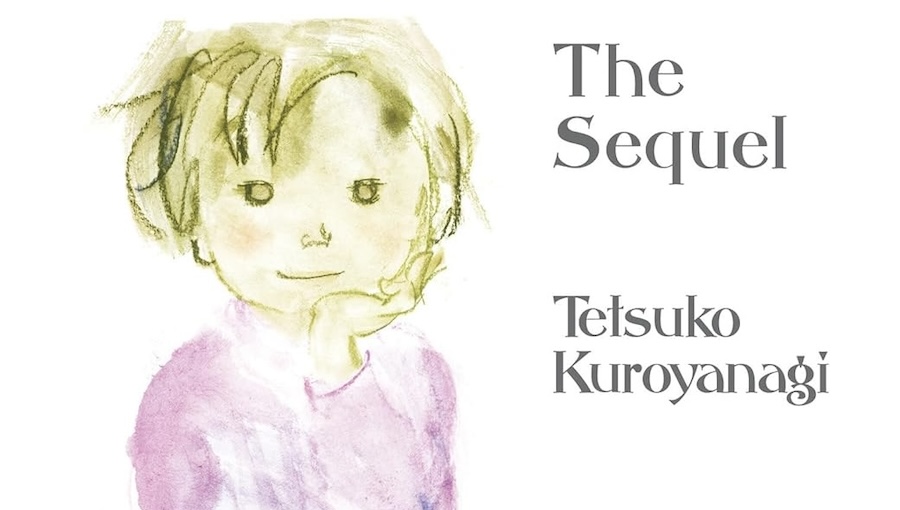
The following is an interview with translator Yuki Tejima regarding the upcoming release of the first-ever English language translation of Tetsuko Kuroyanagin’s Totto-chan, The Little Girl at the Window: The Sequel through Kodansha USA Publishing. In this interview, Fanbase Press Editor-in-Chief Barbra Dillon chats with Tejima about the creative process for approaching the translation of a prior work, the exciting events planned for the book’s release, and more!
Barbra Dillon, Fanbase Press Editor-in-Chief: Kodansha USA Publishing will soon be releasing the first-ever English translation of Tetsuko Kuroyanagin’s Totto-chan, The Little Girl at the Window: The Sequel. What first intrigued you about translating the sequel to this impactful story?
Yuki Tejima: Tetsuko Kuroyanagi is a legend, both in Japan and in my own household. When our family moved from Tokyo to Los Angeles in the early eighties, my mother, who had been a big fan of the iconic Kuroyanagi-san since the seventies, went a whole year without any contact with news or media from her home country. (There was a time before YouTube.) Late one night, she was flipping through the American channels and was stunned to see Tetsuko Kuroyanagi on the Johnny Carson Show, which she says instantly took her back to Japan. She was so moved. Growing up I heard my mother mention Kuroyanagi-san on numerous occasions, and I felt as though I knew her in person, though I wasn’t exposed to her work until later in my own life. I’m sure I’m not alone in feeling that way. Being asked to translate this book was a dream, and something I couldn’t believe was real at first. No one is that lucky, I thought. No one.
BD: The process for translating a work necessitates a nuanced approach to keeping the author’s original style, tone, and meaning intact. When tackling a project like Totto-chan, is there anything that guides or propels your approach to the translation?
YT: Because Tetsuko Kuroyanagi has such a singular voice that anyone in Japan would recognize, both in a literal and figurative sense, I knew that I had to do everything I could to capture it in English. I read and reread the bestselling first book, Totto-chan, the Little Girl at the Window, in both English and Japanese, as well as her other books in Japanese, trying to inhabit the world in which she lives, while watching and listening to her on TV, online videos, audio clips. It is astounding that I can turn on the TV in Japan today and see her day and night, hosting her fifty-year daily television program or appearing as a special guest on prime-time shows. Trying to inhabit her world meant learning about the history of Japanese cinema, television, music, architecture, and the legendary Showa-era stars whose names I’d only heard of before. This experience has been a highlight of my literary translation career thus far.
BD: What are you most excited for readers to discover with this new edition?
YT: I believe readers who are interested in Japanese culture, especially when it comes to the arts and Tokyo life in the Showa era, will find this book to be a treasure trove of inspiration. But even without any knowledge of Japanese movies or television, the story of an accident-prone girl who was considered a troublemaker in the classroom until she found a school and teacher who understood her, helped her see that she could turn each of her quirks into unmatched gifts, is an inspiring story that continues to uplift me even after I’ve finished translating the book.
BD: At Fanbase Press, our #StoriesMatter initiative endeavors to highlight the impact that stories can have on audiences of various mediums. How do you feel that Kuroyanagi’s story may connect with and impact today’s readers, and what, if any conversations do you hope that it may invite?
YT: Anybody who has ever lived through a difficult moment in their life—in Tetsuko Kuroyanagi’s case, it is everything from living through the war to getting through her first acting audition—will find hints in Kuroyanagi’s life story on what helps to keep you afloat when times feel unbearable. I was going through a rough patch myself when I was translating this book, but being able to translate her words was a reminder every day to keep going, even when things may seem bleak in the moment. I believe Tetsuko Kuroyanagi is a hero to so many people, not only because of the immense body of work she has created, but in the way she has lived her life.
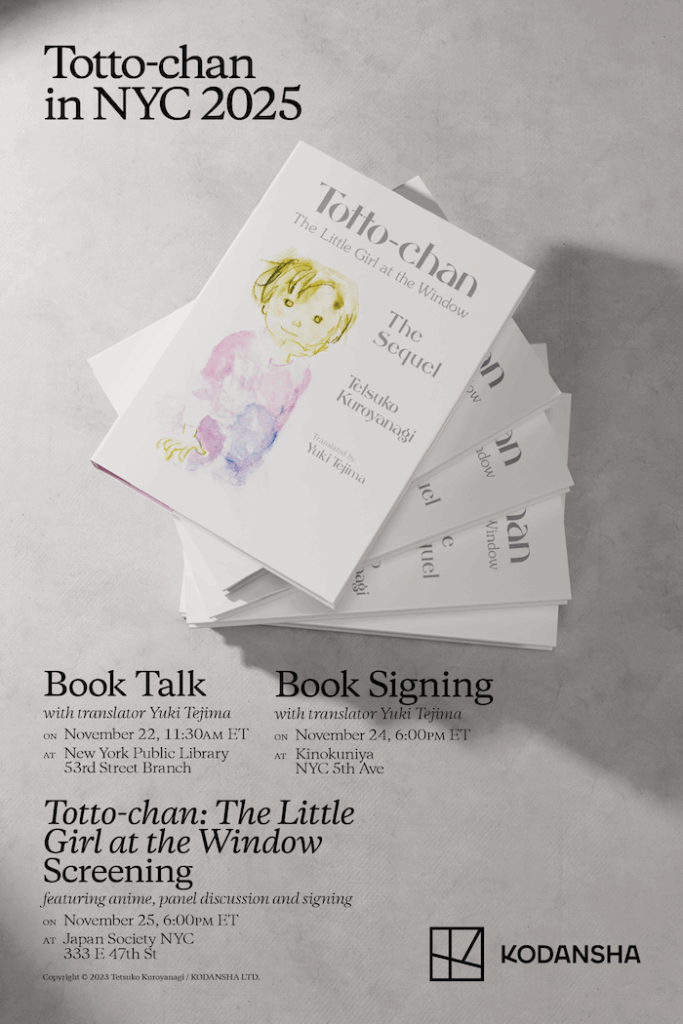
BD: In addition to the release of the book, you will be participating in several events in November, including a discussion at the New York Public Library. What do you find to be most impactful in having the opportunity to discuss this project with readers?
YT: There are so many true episodes in this book where Totto turns a difficult, nail-biting, even humiliating situation into a brilliant opportunity, and I was surprised time and time again by how she was able to come out on the other side, not only landing on her feet but propelling herself up and forward, beyond anybody’s imagination. I think anyone who reads the book, whether they are familiar with the work and life of Tetsuko Kuroyanagi or not, will find ways to connect with the spirit in which she lives, loves, and bounds through life.
BD: Lastly, what is the best way for readers to learn more about Totto-chan, The Little Girl at the Window: The Sequel and your other work?
YT: I love to share the books I’m reading or translating over on my Book Nerd Tokyo website and social media account (@booknerdtokyo).
