
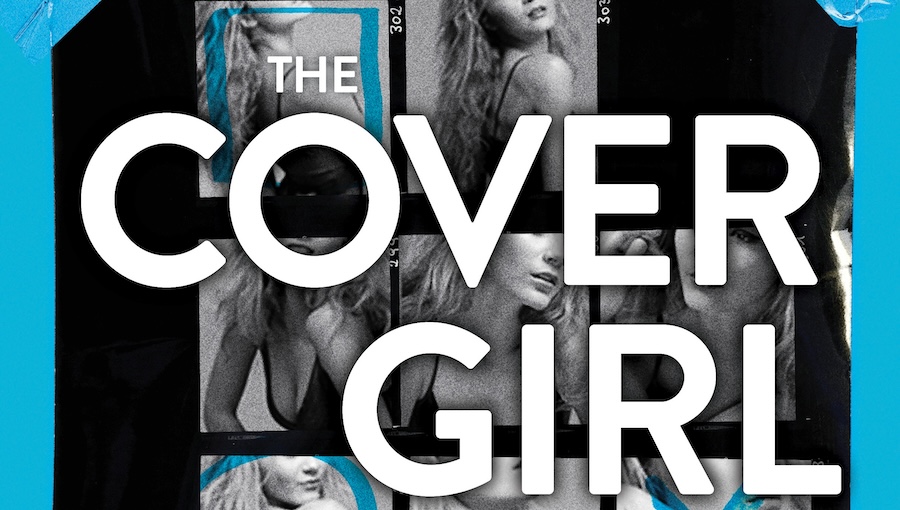
The following is an interview with writer Amy Rossi regarding the release of her debut novel, The Cover Girl, through publisher HarperCollins. In this interview, Fanbase Press Editor-in-Chief Barbra Dillon chats with Rossi about her creative process in bringing the story and characters to life on the page, what she hopes that readers may take away from the story’s themes, and more!
Barbra Dillon, Fanbase Press Editor-in-Chief: Congratulations on the release of The Cover Girl! What can you share with us about the premise of this impactful story?
Amy Rossi: Thank you so much, and thank you for including me! The Cover Girl is about Birdie Rhodes, who is discovered by the legendary modeling [scout] Harriet Goldman as a teenager in the 1970s – and whose life changes when she poses for the cover of an album and the rock star involved makes himself both her boyfriend and legal guardian. The book follows two timelines: one throughout the ’70s, ’80s, and ’90s as Birdie’s time with the rock star changes her relationship to her career, to Harriet, and to herself, and one in 2018 as Birdie, now in her 50s, must reckon with the past when she’s invited to a gala honoring Harriet’s career.

BD: How would you describe your creative process in bringing this hard-hitting story and its characters to life on the page?
AR: I think I always knew this was something I wanted to write about. I really love classic rock music, but I don’t always love everything associated with it – the objectification, the exploitation, the brushing off predatory behavior as “it was a different time.” The idea of what that would be took shape when I was a graduate student in an MFA program. I wrote a short story about Birdie, and several years later (after having no luck placing it), I realized this wasn’t actually a story and I wasn’t done with her. The story was structured in vignettes, which meant I had an outline.
I spent a lot of time reading model memoirs and learning about ’70s rock tours. So much of the logistics ended up being cut because it was overexplaining – I needed to know certain things; the reader didn’t need to know that I knew them.
Most challenging was making sure my craft choices were effective. The rock star remains unnamed throughout and Birdie does not have spoken dialogue, and I wanted these things to feel natural to the book and not pull readers out.
BD: What makes HarperCollins the perfect home for this story?
AR: As one of the big 5 publishers, HarperCollins is home to many imprints showcasing a variety of genres and styles. I was fortunate to find a home with the HarperCollins’ HTP Books umbrella, which sits perfectly in that upmarket space between literary and commercial fiction, much like The Cover Girl. This means I benefit from industry expertise across genres, which I really appreciate!
BD: At Fanbase Press, our #StoriesMatter initiative endeavors to highlight the impact that stories can have on audiences of various mediums. How do you feel that Birdie’s story may connect with and impact readers?
AR: Too often, the Birdies of the world are only considered in relation to the men who harmed them, and I wrote this book because I believe stories like hers deserve to be centered. The Cover Girl can get dark at times, and I want to acknowledge the fact that it deals with a girl who is groomed into a relationship with a 31-year-old man when she’s 15 which may be triggering.
Ultimately, I hope the book offers readers validation, healing, and hope. You have a right to be seen, and you have a right to your story. I hope this book helps someone who needs to see themself on the page and makes them feel less alone.
I also want to note that part of Birdie’s story involves finding a way to give back. I hope readers connect with – and are inspired by – her compassion.
BD: Are there any other projects that you would like to highlight for our readers?
AR: I’m hard at work on a new novel that will explore some of the concepts that I return to again and again – my pop culture obsession, my affection for the Sunset Strip – but in a different way. I’ll also be a part of Hit Repeat Until I Hate Music: The March Xness Anthology, an essay collection that will be published by Split Lip Press in March 2026. My essay about how grunge music didn’t end glam metal is included, alongside some really amazing work.
BD: Lastly, what is the best way for our readers to find more information about The Cover Girl?
AR: My website, amyrossi.com, covers all things The Cover Girl. I’m also @amyrossiwriter on Instagram, for anyone who wants book updates with a side of dogs posing with books I’m excited about. I’m on BlueSky (@mossyair.bsky.social), and I send a monthly newsletter called About a Girl.
