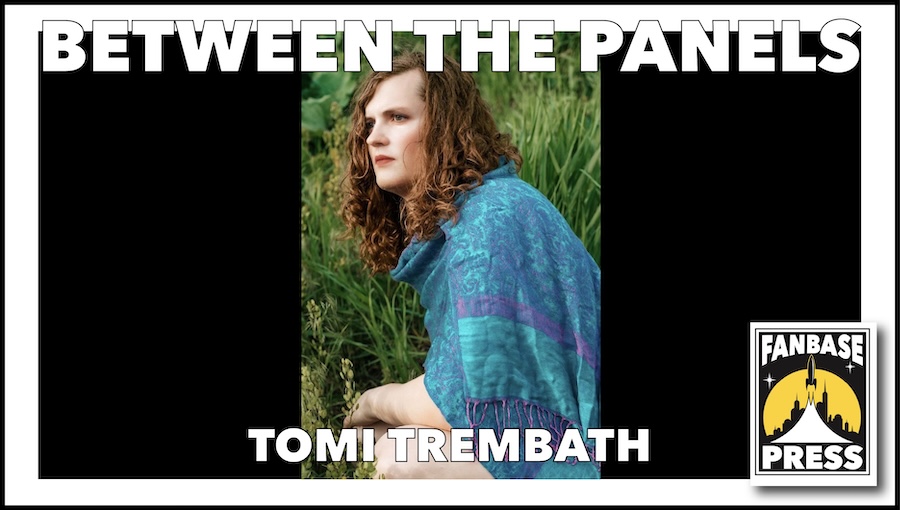
“Between the Panels” is a monthly interview series focusing on comic book creators of all experience levels, seeking to examine not just what each individual creates, but how they go about creating it.
Tomi Trembath started her comics journey like so many other creators who were inspired by the works they love. But it’s the dedication to craft, steadily honing one’s skills — in this case, both writing and podcasting — that sustains a career. Tomi has interviewed plenty of creators as a show host; now, it’s her turn in the guest chair.
First off, the basics…
Your specialty (writer/artist/inker/etc.): Writer
Your home base: Cedar Rapids, Iowa
Website: KeymasterCollective.com
Social Media
Instagram: @keymastercollective
Facebook: @tomi.trembath
Bluesky: @tomitrembath.bksy.social
Fanbase Press Contributor Kevin Sharp: We start with the same question for all guests: Why comics? What is about this medium that attracts you as both a reader and creator?
Tomi Trembath: As a young reader, I was first drawn to comics because they seemed like a bottomless well of interconnected stories. We didn’t have a comic book store within 50 miles of my hometown, but the rumors of the ongoing events in Marvel and DC comics that came my way always made my imagination run wild. These secondhand accounts painted a picture of a world where anything could happen to the heroes I only knew from their sanitized Saturday morning cartoons. Superman could die, Spider-Man could fail to save his girlfriend, and my favorite superhero teams had a seemingly endless roster of characters for me to discover.
As I grew older, third-party independent comics reinvigorated my love of the medium. The Image comics of the 2010s showed me how a writer and a small team of artists could create high-concept stories in imaginative worlds of their own design. Even now, as I’m reading comics in different formats from all over the world, I’m continuously impressed with the way this medium acts as a platform for the kind of stories and representation we rarely see elsewhere.
As a creator, the collaborative nature of comics makes it my medium of choice. I’m not a visual artist myself, but I love bringing a team of artists together to bring my stories to life in ways I could never accomplish on my own. The iterative process of creating a comic also helps keep my passion alive, and gives me something to look forward to every step of the way.
KS: Before we get to your comics writing specifically, let’s go back to when creative writing first entered the picture for you. Was that a hobby you dabbled in in childhood or something you came to later?
TT: I think I was around 7 or 8 years old when I made my first comic. I learned how to make a comic from reading Captain Underpants, and used those skills to bring my first-ever superhero to life, in the poorly drawn pages of Phantom Man. (Note, this was at least a year before Danny Phantom came out, so my ghost-themed superhero was still a somewhat original idea.)
I didn’t stick with the hobby for very long, but I dabbled in writing here and there throughout middle and high school. I tried my hand at writing fan fiction a couple times, and in my teen years I wrote a couple short stories that impressed my teachers enough for them to encourage me to keep at it. However, I never felt like I could write sci-fi and fantasy stories at a level I was satisfied with, and didn’t have the patience to stick with long-form prose writing.
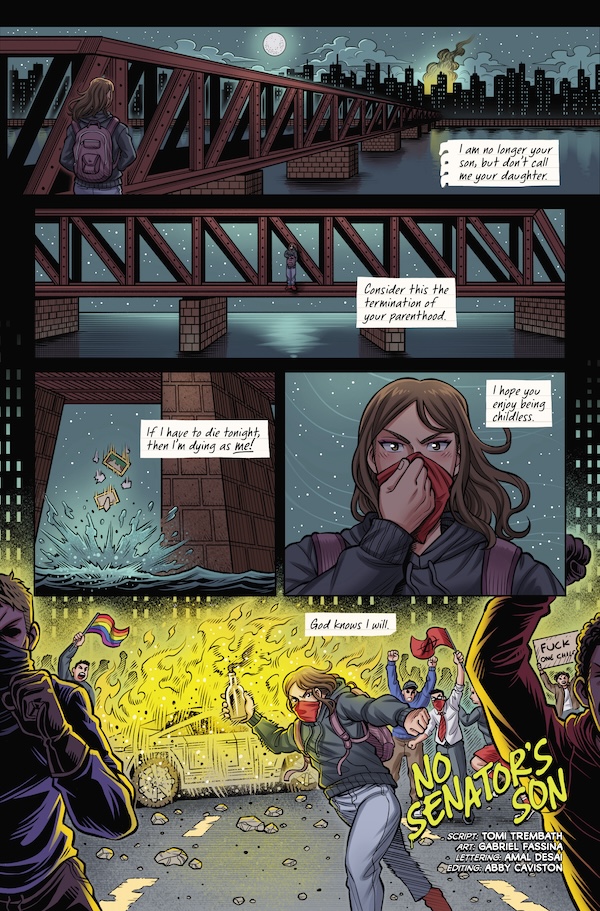
In 2021, I started taking comic writing more seriously after my best friend helped me find some resources on writing comic scripts and finding artists-for-hire online. I found artists to adapt my first few scripts, and I’ve been building a portfolio of short comics ever since!
KS: Did you have the idea/daydream/goal of someday working in the arts in some capacity?
TT: As a kid, being a comic book creator/artist was the dream. However, my drawing skills never developed to a point where I felt like that could become a reality. I was one of those kids who could only draw superheroes, and I struggled with almost anything else. I never really found my calling outside of comics as I grew older, and I put my artistic pursuits on hold while I went to college for a “more practical” computer science degree. It’s hard to say if that was the right choice or not, but it has afforded me some level of stability while I make comics and podcasts outside of my day job.
KS: I won’t ask if you remember the first comic you ever read, but do you remember your early exposure to the format — either through floppies, graphic novels, webcomics, or some combination?
TT: I remember my first encounter with a comic book was a promotional Iron Giant comic they were handing out at a movie theater. A few years later, my grandpa took me to an excellent comic shop in Denver, Colorado, where I picked out my real first comics: an old issue of Superboy & the Legion of Superheroes and an issue of Peter David’s Incredible Hulk run that caught my eye.
When I was a little older, I discovered the graphic novel section at the local Waldenbooks, and from that day forward they became my go-to gift request for birthdays and Christmases. To this day, they’re my preferred reading format, though I’m happy to support my favorite creators and series through buying floppies.
KS: RIP, Waldenbooks. A lot of fond memories for me in there, too. As you read more comics over the years, enough to become aware of the writer’s voice aside from the images, who were some of your favorite writers to follow?
TT: Like many readers my age, Ultimate Spider-Man, Invincible, and The Walking Dead were some of the first series to be available and accessible enough for me to read them in their entirety. Because of this, Bendis and Kirkman were some of the first names I started to seek out elsewhere.
Around the same time, I started getting really into comic book interview podcasts, namely Kevin Smith’s Fatman on Batman and Word Balloon with John Siuntres, so there were literal writer’s voices I started seeking out from there. Grant Morrison has been a major inspiration throughout the years, and I’m just as excited to discover new interviews with them as I am to dig into their backlog of work. Sophie Campbell is someone I’ve really enjoyed following in recent years, and I hope to someday leave a similar impact on my favorite franchises as she has with Ninja Turtles and Supergirl. Recently, I’ve been doing a lot of research on Rachel Pollack’s work. Not just her comics, but her novels and more esoteric writing, as well. Rachel’s been something of a spiritual North Star for me for the last two years, and this research has had a tangible, positive impact on my life already. I hope to be a part of a few projects dedicated to Rachel in the near future, but those are still taking shape so I can’t say too much at this time.
KS: You mentioned creating a portfolio of short comics once you learned the format. Was a comic script something you did for fun, or did you treat them as a step toward an ultimate finished project?
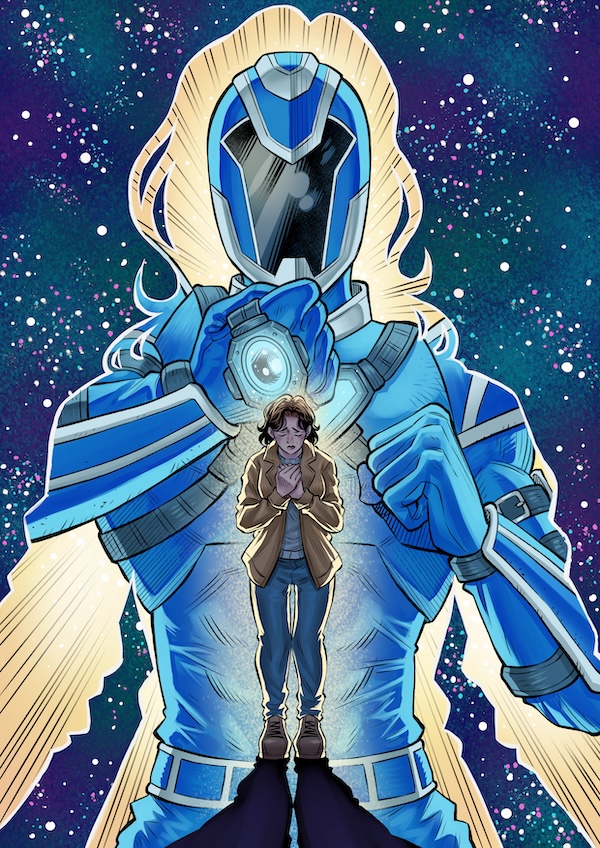
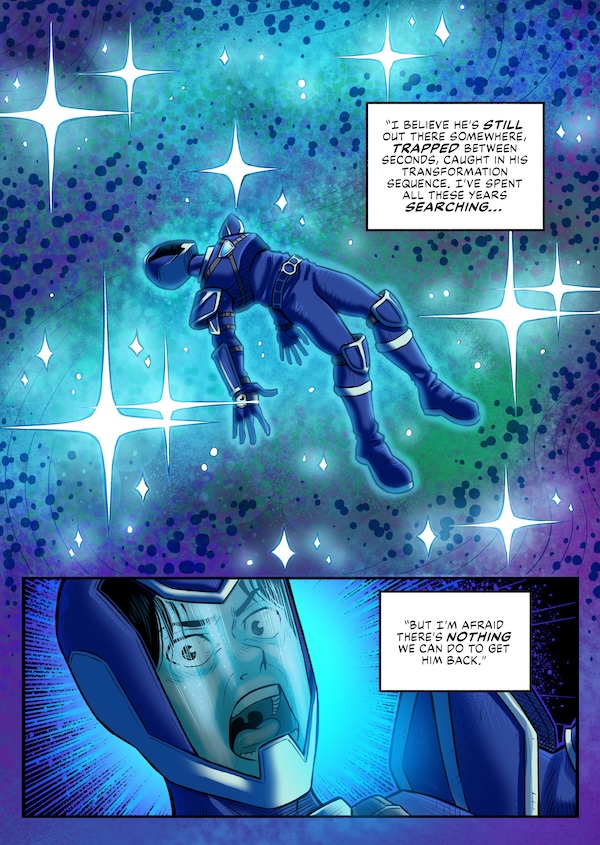
TT: I find that I work best when I’m writing with a purpose. I don’t often write just for fun, unless I feel particularly inspired by an idea. With that said, I learned this format for the express purpose of creating my ongoing passion project, When We Transform. I’d seen the advice that one’s passion project shouldn’t be their first-ever comic, since you learn so much early on. I created a 6-page pirate comic called The Captain’s Song based on a writing prompt I found online, to practice the process of writing a script and finding artists to adapt it. From there, I started writing the first issue of When We Transform 6 to 8 pages at a time. I began with a short story that could work as a standalone proof of concept, and then wrote follow-up stories to expand it into a full-size issue.
KS: Were you also submitting your scripts anywhere during this time?
TT: I only started writing for submissions after I published When We Transform #0 on Kickstarter. I knew that I wanted more practice with the medium before returning to that series. Plus, any money I made from my accepted submissions could go right back into getting new pages and art prints made, while building out my comic portfolio in the process.
KS: What was the first writing of yours that found a publisher?
TT: My first accepted script was for a 6-page comic called Monochromatic, for the Aces & Aros anthology from Lifeline Comics. This was for a collection of stories highlighting Asexual and Aromantic representation. I explored this theme through the lens of giant combining robots, and one bot’s aspirations of becoming something more than just the arm of a larger robot.
KS: Is there something you feel you’ve gotten a better handle on writing-wise the more comics you’ve produced? There may be more than one thing, but one main one…
TT: I think I’ve developed a knack for introducing readers to high-concept worlds and stories within just 4 to 8 pages of a short comic. It’s a matter of problem solving and efficiency, finding a way to get readers invested in my characters and provide the relevant details of a particular setting in such a short amount of time. It helps when I can find the “conversation” or narrative throughline at the heart of a story and expand from there. Every page needs to have a purpose, and there’s no room for wasted space. Honestly, working on my first full-length comic script has presented its own challenges, because the harsh restrictions of short comics can also be helpful guardrails in keeping the story focused and knowing exactly which problems to solve on each page.
KS: How did podcasting enter the timeline for you? You were listening to interview podcasts before, but tell us about the decision to start doing it yourself.
TT: I started podcasting during the COVID lockdown in 2020. My best friend asked me to be his cohost for a show dedicated to DC’s New 52 line of comics, and he even offered to do all the editing. We went into this project knowing we would likely never finish covering that entire era of comics. This was really intended to be our way of getting some practice with recording and editing while finding a format that worked for us, so we could bring those skills to future projects that we were really passionate about.
I eventually took over editing duties, and found I actually enjoyed the process. Life, unfortunately, got in the way of our recording sessions later on, and we moved on to other projects. I started my own solo podcast, Giant Sized Violence, after reading James Harren’s UltraMega which inspired me to create a show dedicated to comics with a clear Tokusatsu-influence. That led to opportunities to interview creators I admired like Melissa Flores and Mat Groom, to discuss comics like Power Rangers, Marvel’s Ultraman, and the Massive-Verse line of books.
KS: Then, you later added another show to your resume. What was the impetus behind Transcending Comics?
TT: I came out as trans a few years into making Giant Sized Violence. I became friends with a few other trans podcast hosts, and soon realized that there wasn’t a podcast dedicated specifically to trans representation in the comic book industry. My experience so far put me in a position to do something about that, so I created Transcending Comics as a means of interviewing other trans comic creators, and discussing trans representation in comics. Since then, I’ve interviewed a few of my heroes, managed to win a couple podcasting awards, and found some incredible opportunities along the way. I’m starting to podcast semi-professionally on the side, producing The Re-Patterning Podcast for Arden Leigh, with a few other upcoming projects in the works, as well.
KS: For those who aren’t familiar with your audio work, please give us the “elevator pitch” for your shows.
TT: Transcending Comics is my podcast dedicated to trans, non-binary, and genderqueer representation in comics, both on the panels and behind the scenes. We interview trans comic creators in the industry, and discuss comics with notable trans representation and themes. Giant Sized Violence is all about “Tokusatsu” inspired comics, so anything that features giant monsters or transforming superheroes. Basically, if something event slightly resembles Godzilla or the Power Rangers, we’re interested in talking about it!
If you only have time to check out one episode of my shows, I recommend listening to the one titled “It’s Morphin Time,” which I’ve published on both feeds. It’s, by far, my most unique and experimental episode, incorporating a lot of music and psychedelic storytelling, and I can’t say I’ve heard anything like it elsewhere. It’s my best attempt to create something like The Midnight Gospel with only the sound-editing tools at my disposal, and it’s still the creative work I’m the most proud of.
KS: How about a shout-out to someone who’s been helpful to you on your comics journey thus far? Could be someone who gave advice, made an introduction, opened a door…
TT: I’d like to take a moment to shout-out my good friend Stephanie Burt. She was the first person I met at Flame Con in 2024, and I’ve slowly discovered that she’s secretly one of the most impressive people I know in the time since. She’s always looking out for her friends and the aspiring writers she works with, and she’s introduced me to a community of creatives that have helped shape my life for the better these last few years. She’s shared many helpful insights into the world of publishing, and she’s always happy to introduce folks with similar interests or common goals on their creative projects.
KS: Imagine a hypothetical Comics Hall of Fame, where you get to induct one title from history — a single issue, miniseries, or graphic novel that you think represents the medium at its best. What gets your plaque?
TT: Assuming this hypothetical Hall of Fame already has a place for the classics (Watchmen, Animal Man, etc.), I’d like to go with something more recent that I think the comic book industry would do well to learn from. UltraMega #1 is everything that I think the first issue of a series should be. Its oversized format makes it a satisfying reading experience on its own, while simultaneously setting up the rest of the series. It’s a masterclass in condensed storytelling in the way it sets up an eternal conflict and our hero’s role in it in just 4 pages, leaving plenty of room for the action in the rest of the book. The art is just incredible, as well, and I love the way James Harren will play with different art styles to suit a particular scene. The book wears its influences on its sleeve, but never feels derivative. There have been many attempts in recent years to translate the tropes of Tokusatsu heroes into the realm of comics, but I believe UltraMega succeeds in deconstructing the genre while telling an original story along the way.
KS: No argument here on that pick. Finally, please let readers know what you have coming up next, and also where they can find more of your work.
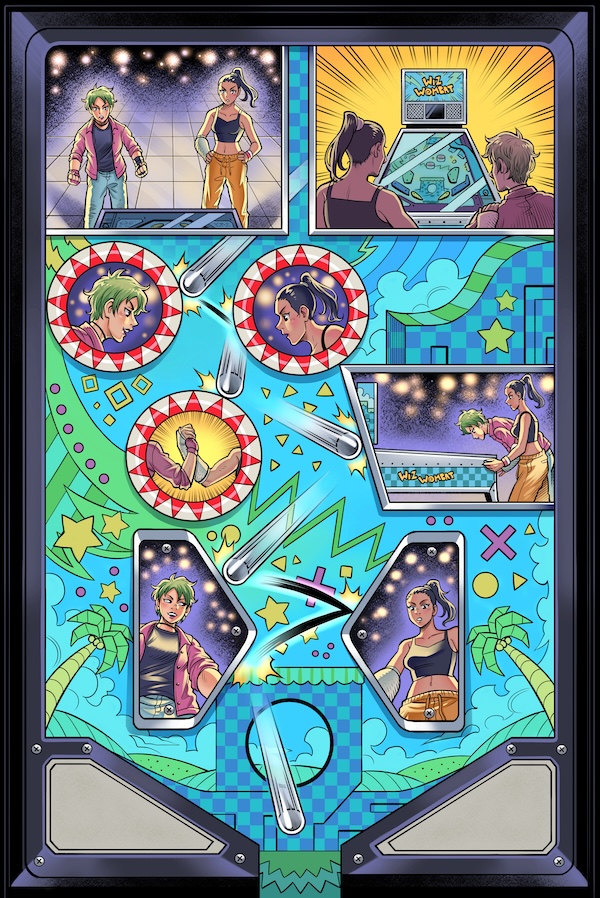
TT: I have an upcoming short comic about pinball, called “Split Flip” featured in A Women’s Sports Comic Book Anthology from Lifeline Comics, live on Kickstarter this November.
New episodes of Giant Sized Violence and Transcending Comics are coming soon. I’ll also be launching a music podcast in the near future, Vision in the Void, dedicated to my favorite independent artist, Dear Horizon.
The next issue of When We Transform will likely be on Kickstarter in 2027, so keep an eye out for that, as well!
